Residence Permit in Turkey: Conditions for Obtaining a Permit for Living


Turkey remains a good option for relocation as well as for permanent residence and education. However, to obtain legal status in this country, one must go through a rather complex procedure. It has its pros, difficulties, and peculiarities.
What is the Residence Permit in Turkey and what advantages does it provide?
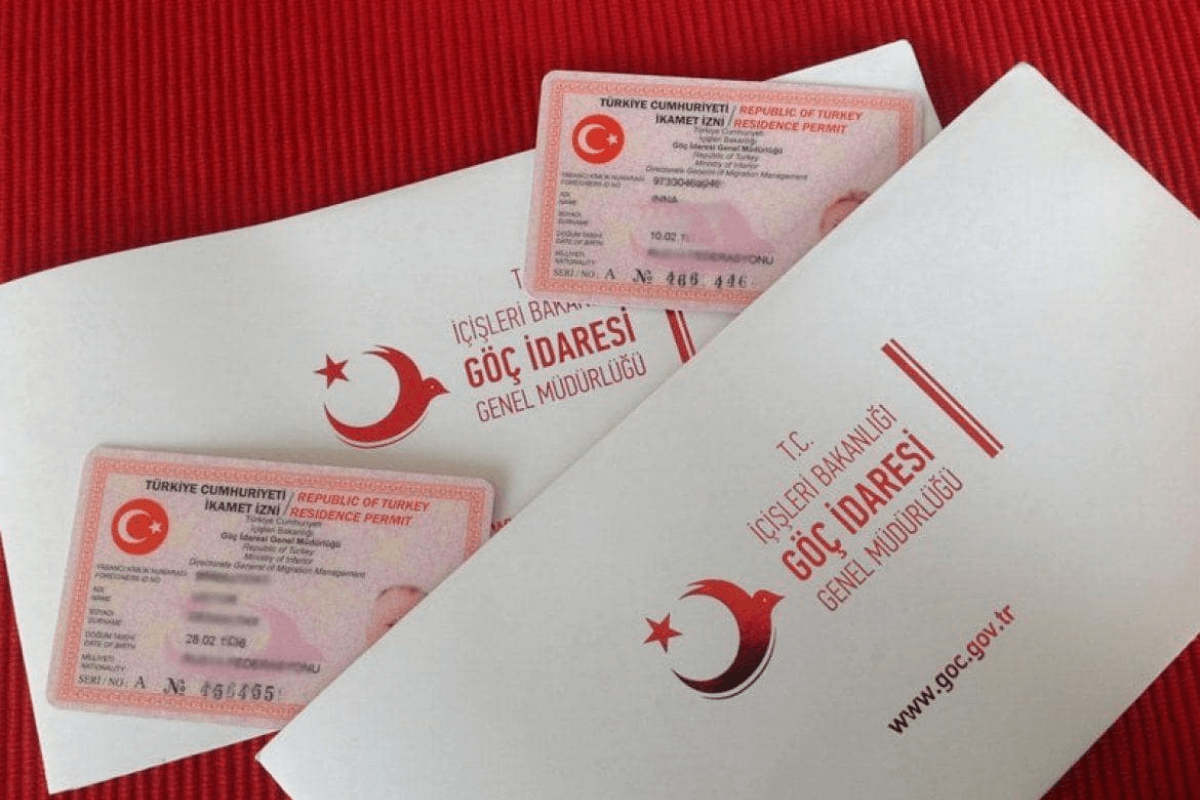
The residence permit in Turkey, often referred to as VNP or VNZ, is an official document that allows a foreigner to legally stay in the country for a specified period. For citizens of other states, such a permit is one of the main mechanisms for long-term residence in Turkey when the stay is not limited by the validity of the visa-free regime or visa. The rules for obtaining it are regulated by Turkish legislation on foreigners and international protection, particularly Law No. 6458.
Having a residence permit allows one to legally reside in the country for the period for which it is issued, use the administrative and social services provided by law, obtain residential documents, and maintain official foreigner status. At the same time, the residence permit does not equate to Turkish citizenship and does not provide all the rights enjoyed by citizens.
Depending on the circumstances, a foreigner may have access to a short-term, family, student, or long-term residence permit. The law separately provides for humanitarian permits and permits for victims of human trafficking. Each category has its own grounds, document requirements, and rules regarding validity periods.
For someone planning to relocate to Turkey for an extended period, it is important to understand the difference between the right to enter and the right to reside. A visa or visa-free regime determines the conditions of stay after crossing the border, while VNP creates a separate legal basis for long-term residence. Therefore, purchasing property, studying, or other life circumstances should not be considered separately from the corresponding procedure for obtaining the permit.
The holder of a residence permit must also comply with the conditions under which the document was issued. If the basis for residence ceases, personal circumstances change, or the foreigner uses the permit improperly, this may affect their further status. That is why, before applying, it is advisable to determine not only the desired length of stay but also the most suitable legal basis.
Who can obtain a residence permit in Turkey: main grounds for application
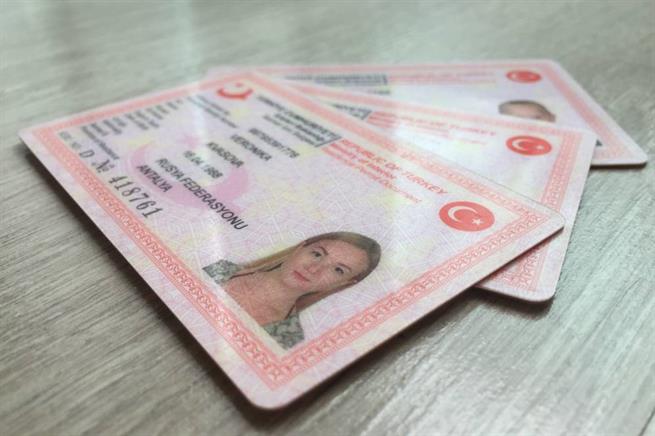
Turkish legislation provides several categories of foreigners who can apply for a residence permit. The most common grounds for foreigners are short-term ones related to tourism, ownership of real estate, business activities, or medical treatment. Specific rules apply for family members of Turkish citizens or other foreigners, students, and those who meet the criteria for long-term residence.
It is important to consider that merely being in Turkey does not automatically grant the right to obtain a permit. The applicant must confirm the purpose of stay and meet the established conditions. In some cases, migration authorities may require additional documents or information to verify the stated purpose.
A short-term permit may be granted to, among others, foreigners who own residential real estate and use it as a residence, those intending to establish business or commercial ties, undergo certain training or internships, participate in exchange programs, or are in the country for tourism. Specific grounds are provided for those studying the Turkish language or those who have recently graduated from a Turkish higher education institution.
When choosing a basis, one should assess not only the possibility of obtaining the document now but also the prospect of its extension. For example, the tourism purpose must correspond to the actual circumstances of stay, while student status is tied to education. If a person is actually working, studying, or engaging in other activities that require a separate permit, the ordinary VNP does not replace the necessary documents.
Tourist VNP
The tourist residence permit is intended for foreigners wishing to stay in Turkey for tourism purposes. When considering the application, information about the travel plan, accommodation, planned duration of stay, and other circumstances may be taken into account. If necessary, the applicant may be asked to provide documents or additional information confirming the stated purpose.
The tourist VNP should not be perceived as a guaranteed way to permanent legalization. The right to obtain a permit depends on compliance with the current requirements and the evaluation of the specific application. It is especially important to confirm the reality of the purpose of living and to have reliable documents.
For the applicant, this means that housing reservations, a residence address, medical insurance, and other documents must correspond to the actual situation. Providing contradictory information may create problems during the review. The tourist status also does not automatically grant the right to work in Turkey.
VNP through real estate purchase

Ownership of real estate may be grounds for a short-term residence permit. However, it does not concern just any real estate: the legislation links this ground with a residential property that is specifically used as a residence. Under certain conditions, family members of the property owner may also have the right to apply.
Buying an apartment does not mean automatic obtaining of VNP. The owner must go through the established procedure, submit documents, and confirm compliance with the requirements. In addition, the rules regarding the ability to obtain a permit may change depending on the area, status of the property, and current restrictions.
Therefore, before purchasing housing solely for the sake of legalization, it is worth checking the current rules for the specific address. It is also necessary to consider that ownership of an apartment and the right to reside are legally distinct matters.
Family reunification
The family residence permit is used for family members of Turkish citizens, as well as in specific cases determined by law for family members of foreigners who have a corresponding legal status in the country. Potential applicants include, among others, foreign spouses, minor children, and dependents.
For the family permit, the status of the sponsoring person is crucial. They must meet established income, insurance, housing, and other conditions. The applicant must also confirm the family relationship and the reality of cohabitation.
The legality of the marriage is also checked separately. If it is determined that the marriage was concluded solely for obtaining the residence permit, the issuance of the document may be refused or an already issued permit may be revoked.
Education
The student VNP is intended for foreigners studying in Turkish educational institutions. It may be issued for students of higher education programs and, in certain cases provided by law, for schoolchildren. The duration of the document is tied to the period of study and relevant documents from the educational institution.
Student status does not automatically create the right to reside for parents or other relatives. Family members must have their own legal basis for stay.
For some students, the law also provides for the possibility of work provided a necessary permit is obtained. Different restrictions apply for students in lower years regarding the start of employment and the number of working hours.
Employment
For working in Turkey, one VNP is not enough. A foreigner must have the corresponding work permit unless the law provides for an exception. This is fundamentally important for those planning to relocate for employment purposes.
The work permit and residence permit are related but serve different functions. The former concerns the right to engage in labor activity, while the latter confirms the legality of residence. Therefore, workers need to arrange their status according to their employment situation rather than trying to use a tourist VNP as a substitute for a work permit.
Medical treatment and other grounds

A separate basis may be medical treatment. A short-term permit in this case may be granted to foreigners coming to Turkey to receive medical assistance if their illness does not pose a threat to public health.
The law also provides for other special grounds. Among them are scientific research, internships, participation in exchange programs, stays based on decisions of administrative or judicial authorities, as well as certain investment situations.
What documents are needed to prepare for obtaining a VNP
The list of documents depends on the type of permit and the applicant's specific situation. There is no universal package that is the same for tourists, students, property owners, and family members. The basis for residence determines a significant part of the documents that need to be added to the application.
Typically, the applicant needs identity documents and proof of legal entry, photographs of the prescribed format, confirmation of residence address, medical insurance when required, as well as documents confirming the purpose of stay. For family status, documents proving family ties are required; for education, documents from the educational institution; and for real estate, documents proving ownership.
The residence address must be reliable and current. Turkish migration authorities explicitly require accurate information about the location of residence to be submitted, and any address changes must be reported in the established manner.
Documents must be prepared with particular care, as an error in a name, passport number, address, or dates can lead to the need for corrections or additional explanations. Foreign documents in certain procedures may require translation, notarization, or other forms of legalization depending on their type and the specific authority's requirements.
It is also important to check the validity period of the passport. A document expiring before the planned residence period may create practical difficulties in obtaining the permit.
How the procedure for obtaining a VNP in Turkey works: step-by-step instructions
The residence permit is processed through the official electronic system. The Turkish Migration Office emphasizes that applications are submitted through the official resource, and the procedure must be registered online. It is separately noted that no fee is charged for the registration.
The overall sequence of actions looks like this:
- Determine the legal basis for residence.
- Check if the applicant meets the requirements of a specific type of VNP.
- Prepare the passport and other necessary documents.
- Obtain medical insurance, if it is required.
- Fill out the electronic application through the official system.
- Obtain information on further actions and, if the procedure requires, attend a personal appointment.
- Pay the required state fees.
- Submit documents in the established manner.
- Await the migration authority's decision.
- After a positive decision, receive the residence permit card.
It is especially important to use only official resources. The Migration Office warns foreigners about intermediary websites that may imitate government services or offer document processing for an additional fee.
After submitting the application, it is important to keep receipts and confirmations related to the procedure. If the applicant plans to leave Turkey before obtaining the card, it is necessary to separately check the border crossing rules and return conditions. Official regulations provide a special procedure for certain applicants who have already submitted documents but have not yet received their card.
How much does obtaining a VNP cost and what additional expenses should be considered
The expenses for VNP consist of more than just one payment. The applicant may need funds for state fees, document production, medical insurance, photographs, translations, notarization, and, depending on the situation, other administrative procedures.
The amount of state payments is not fixed for many years: the relevant rates are reviewed and determined according to Turkish legislation. As of 2026, the official information provides a separate fee for the residence permit document, and the amount of the fee for the right to reside depends, among other things, on citizenship and the applied rules. The Migration Office reported in May 2026 that there had been no changes to the established sums at that time.
As of January 1, 2026, the fee for the residence permit document is 964 Turkish lira. Additionally, there is a charge for the residence permit, the amount of which is determined by the rules established by the state and may differ for citizens of different countries.
The cost of medical insurance should also be included in the budget. Its amount depends on age, the insurance program, and the duration of the policy. If documents need to be translated and notarized, there are additional expenses.
It is also necessary to separate state payments from the fees for the services of private consultants. Turning to intermediaries is not a mandatory condition for submitting an application. Official authorities explicitly warn about the risks of using unofficial websites and dubious intermediary services.
For how long is a VNP issued and how to extend it
The validity period of the permit depends on its type and basis. For short-term VNP, the law provides specific time limits, while family, student, and other types have their own rules. Long-term permits, on the contrary, are issued indefinitely provided the established criteria are met.

When extending, it is again necessary to confirm compliance with the requirements of a specific category. If the basis for residence has been preserved, the applicant submits documents for extension within the established time limits. If circumstances have changed, it may be necessary to switch to another type of permit.
For example, a student who completed their studies can no longer continue to use the status based on education without justification. A property owner must maintain the relevant ownership and actual residential basis. For family VNP, it is important that the conditions for family reunification continue to exist.
Long-term permits have separate, significantly stricter criteria. In particular, one must have at least eight years of continuous residence in Turkey on the corresponding status, not receive social assistance during the last three years, have sufficient and stable income, medical insurance, and not pose a threat to public order or safety. When calculating the eight-year period, half of the term of the student VNP is counted, while the full term of other corresponding permits may be counted in full.
Thus, long-term status does not arise automatically after eight years of stay. It is necessary to meet all established criteria and undergo a separate procedure.
Rights and restrictions of VNP holders in Turkey
The holder of a VNP has the right to legally reside in Turkey for the duration of the document and based on the ground under which it was issued. The permit also allows one to handle various administrative and residential matters related to legal residence in the country.
At the same time, VNP does not mean an automatic right to work. If a foreigner plans to work officially, they must have a work permit where required by law. The student VNP is also not an independent substitute for a work permit.
Another significant restriction is the need to comply with the purpose of stay. If the permit was obtained for education, tourism, or family residence, using the document for other activities may have negative consequences.
VNP holders must also keep track of the accuracy of their address. In the event of a change, it is necessary to inform the relevant authorities in the established manner. Turkish regulations require the obligation to provide accurate and complete information about the place of residence.
It is important to also be aware of the rules for staying outside Turkey. Different requirements regarding the duration of absence may apply for different categories. For example, for family VNP, excessive prolonged absence may be grounds for denial of extension.
The most common reasons for refusal to issue a VNP and how to avoid them
Refusal may be associated with the applicant's non-compliance with the requirements of a specific type of permit, the absence of necessary documents, or insufficient confirmation of the purpose of residence. Problems also arise if the information in the application does not correspond to actual circumstances.
One of the typical mistakes is choosing a basis solely because of its formal availability without considering the real situation. If a person is not actually studying but applies as a student, or cannot confirm the stated tourism purpose, this may raise additional questions.
For family VNP, the authenticity of family relationships, the financial capabilities of the sponsor, and compliance with other established conditions are of particular importance. Official rules explicitly provide for refusal, cancellation, or non-extension of the permit if the relevant requirements are not met, if the permit is used improperly, or if there is a decision on expulsion or entry ban.
Avoiding problems is aided by careful document review before submitting an application. Particular attention should be paid to:
- the validity of the passport;
- the accuracy of the address;
- the compliance of medical insurance with the requirements;
- the confirmation of the stated basis;
- the authenticity of personal data;
- the accuracy of translations and notarization of documents;
- the timeliness of the application submission;
- the payment of established state fees.
One should not rely on dubious websites offering “guaranteed obtaining of VNP.” The Turkish Migration Office separately warns about unofficial resources that collect personal data or require money for services that are actually unnecessary for submitting an application.
Can one obtain a permanent residence permit or citizenship after residing in Turkey?
Long-term residence in Turkey may create opportunities for transition to long-term status, but this process is not automatic. A long-term permit has a requirement of at least eight years of continuous residence on the relevant grounds, as well as additional criteria regarding income, social assistance, insurance, and public order.
A long-term VNP has a significant advantage: it is issued without a defined expiration date. However, its holder does not acquire all the rights of a citizen of Turkey. In particular, a long-term permit does not grant the right to vote and be elected, undergo compulsory military service on the terms of citizens, hold certain positions in public service, and enjoy other rights reserved by legislation for citizens.
Citizenship is a separate procedure and has its own legislative conditions. Having a VNP or even a long-term permit does not mean automatic acquisition of Turkish citizenship. For a person planning to stay in the country for many years, it is important to distinguish three different goals in advance: temporary residence, long-term status, and citizenship.
Therefore, choosing the first VNP is significant also in terms of future legalization. Not every period of stay is equally counted for long-term status, and certain categories have special rules for calculating the duration. For example, when calculating the eight years for a long-term VNP, half of the duration of the student permit is counted towards the required time.
Conclusion
The residency permit in Turkey is a tool for the legal residence of foreigners, but the method of its processing depends primarily on the actual purpose of stay. Tourist trips, property ownership, education, family reunification, medical treatment, and other circumstances have different legal grounds and document requirements.
For successful processing, it is important to correctly determine the category of permit, prepare proof of the purpose of residence, provide a valid address, meet the insurance requirements, and pay the established fees. Equally important is to use the official electronic system and not to pass personal data to dubious intermediaries.
Long-term residence may prospectively open up the possibility of obtaining a long-term permit provided the legal criteria are met. However, each stage of legalization has its own rules, so status needs to be maintained in accordance with the basis on which it was obtained.
Overall, this is a real albeit complex option. It is accessible to every Ukrainian, but with some conditions and peculiarities.

Read also