Admissions 2026: Ivan Franko University Rector Outlines NMT Changes and Application Limits

Admissions 2026
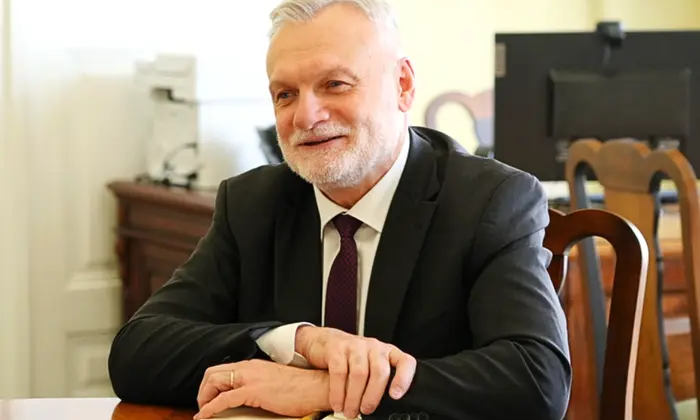
According to Главком: As the 2026 admissions cycle approaches, Roman Hladyshevskyi, rector of Ivan Franko National University of Lviv, has detailed key updates for prospective students. The main registration period for the National Multi-Subject Test (NMT) ended on April 2, with an additional registration window running from May 11 to 16. In 2025, the university emerged as one of Ukraine's most sought-after higher education institutions, receiving 44,233 applications. According to the rector,
'in 2025, over 48% of our first-year students came from outside the Lviv region.' – Roman Hladyshevskyi
The university hosts 130 international students from 21 countries. The most popular faculties among foreign students are:
- Geology
- Geography
- Economics
- International Relations
Additionally, the university employs international faculty from Austria, China, Germany, Poland, Slovenia, Spain, Sweden, and the United States. In 2025, the top undergraduate programs by demand were Philology, Economics and International Economic Relations, Management, Law, and Psychology.
Admissions Cycle Innovations
The 2026 admissions process introduces several changes: applicants can submit up to 10 applications, with a maximum of 5 for state-funded spots. Priority will also be given to master's program applications. The weight of creative competitions in the overall admissions score will increase to 0.7, up from 0.6 in 2025. Ukrainian citizens may substitute NMT results with scores from European national exit exams. In 2026, motivation letters will no longer be mandatory, and video recording will be required for interviews and creative contests. Unified Professional Entrance Exam (UPEE) results will remain valid for two years, and a minimum threshold of 300 points will be set for PhD program admissions.
The university's financial landscape has shifted: in 2022, Ivan Franko National University of Lviv's budget shrank by 3%, and the share of state funding dropped from 59% in 2021 to 51% in 2025. Over the same period, the proportion of self-generated revenue rose from 41% to nearly 50%. Tuition for the most expensive programs in 2025 was around 66,000 hryvnias per year, while cheaper programs cost up to 40,000 hryvnias.
Currently, approximately 5,000 students live in university dormitories, and 18,281 bachelor's and master's students are enrolled in full-time programs. The university also has 970 PhD candidates. As of 2025, 5,570 new bachelor's students were admitted, including 16 men over the age of 25-the lowest figure since 2021, when there were 28. For master's programs, 27 men over 25 were admitted. Roman Hladyshevskyi noted that
'applicants most often choose psychology and law as their second degree.' – Roman Hladyshevskyi
Nearly 600 faculty members and 600 students participated in internship programs during the previous academic year. The rectorial election featured nine candidates. Amid the full-scale war, the financial model of higher education institutions has changed significantly, prompting the university to continuously adapt its programs and strategies.
The 2026 admissions reforms aim to simplify the application process for students and address new conditions that could affect competition for state-funded slots. The university's growing reliance on self-generated revenue reflects its adaptation to shifting economic realities, a critical factor amid declining state support. These changes may influence young people's choice of majors, as financial considerations increasingly play a decisive role in educational decisions.
As the admissions landscape evolves, the Ukrainian Ministry of Culture is also making significant adjustments by reallocating university funding to emphasize essential professions. This shift may impact the choices prospective students make regarding their fields of study, potentially influencing application trends in the upcoming cycle. To learn more about these important funding changes and their implications for higher education, check out the full details in this article on university funding priorities.

Read also