Workforce Planning - What it is and HR Staffing Planning


In today's business environment, human resource management has become one of the key components of a company's effective operation. The question is not only about attracting highly qualified employees but also about correctly planning the number and structure of staff according to the strategic goals of the organization. That is why HR workforce planning is so important. It significantly simplifies the entire training process.
Workforce planning is a powerful tool that allows HR specialists and company executives to forecast personnel needs, optimize employee retention costs, and ensure a balance between workload and resources.
What is workforce planning?
Workforce planning is the process of systematic analysis, forecasting, and planning the company's personnel needs to achieve strategic goals. It involves not only hiring and replacing employees but also optimizing the number and competencies, workload distribution, talent development, and reserve preparation.
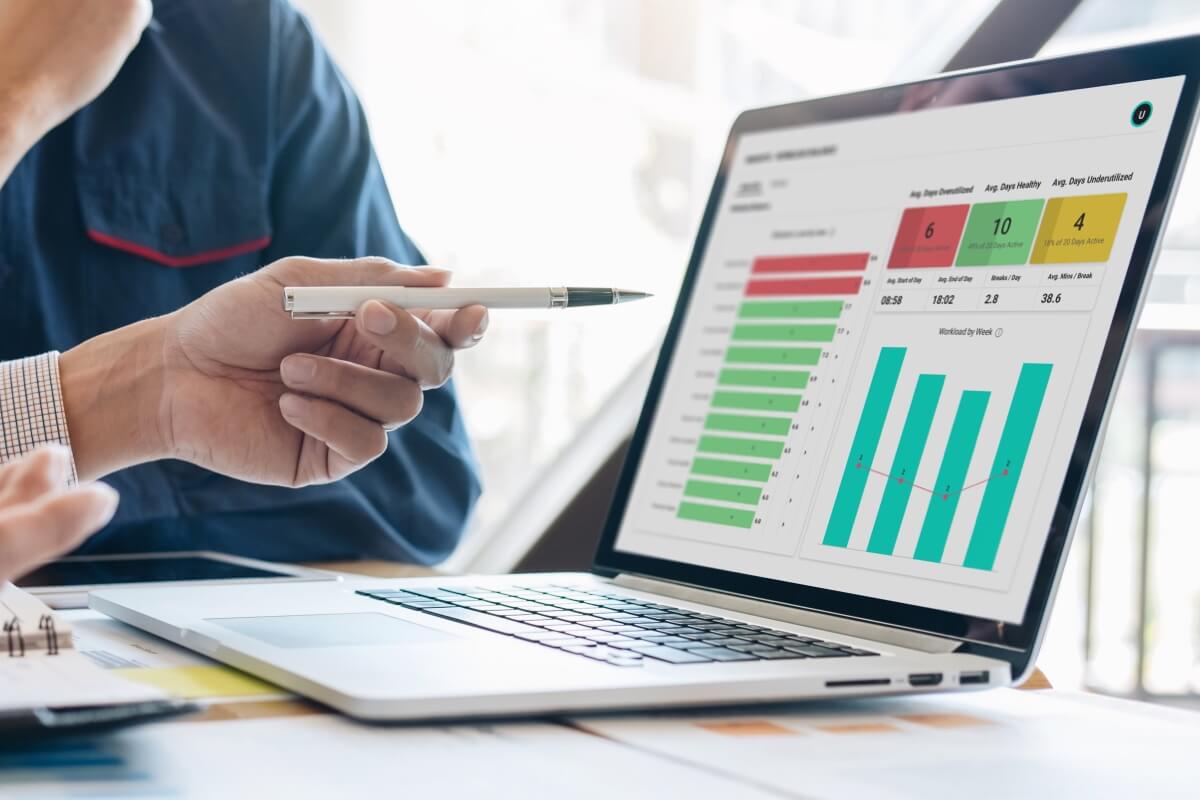
Effective workforce planning allows not only to close current vacancies but also to prepare the company for changes in the market, technological transformations, seasonal fluctuations, or business scaling. It is a strategic process that combines analytics, forecasting, and practical solutions for personnel management, making HR planning more systematic and predictable.
The primary goal of workforce planning is to ensure the right balance between the number of employees, their skills, and the volume of work. This helps avoid situations where a company has a surplus of low-performing staff or, conversely, a shortfall of specialists in critical areas, which can lead to delays, loss of revenue, or a decrease in service quality.
Workforce planning involves long-term and short-term planning, analysis of internal and external factors, identifying key competencies for each position, and assessing potential risks in human resources. It is a comprehensive approach that integrates HR strategy with the company's business strategy.
How does workforce planning differ from conventional HR planning?
Conventional HR planning often focuses on operational tasks, such as closing vacancies, preparing schedules, upskilling employees, or monitoring compliance with labor contracts. It has a local character and is oriented toward current needs.
Workforce planning, however, is strategic and includes analysis of the company's future personnel needs for several years ahead. It is not only about staffing but also about talent development, reserve planning, forecasting changes in demand for competencies, and balancing various categories of employees.
In other words, HR planning can be viewed as an operational aspect of personnel management, while workforce planning is strategic, ensuring the organization's long-term readiness for changes.
Key stages of workforce planning

The process of workforce planning consists of several key stages:
Analysis of the current state of staff. This includes assessing the number of employees, job structure, competencies, productivity, and work effectiveness.
Forecasting personnel needs. This stage determines the quantity and types of employees needed in the future, taking into account business plans and market changes.
Gap analysis of competencies. Current skills are compared with expected needs, gaps to be filled through training, internal development, or hiring external professionals are identified.
Developing action plans. This includes recruitment strategies, employee development, creating a reserve, and competency enhancement programs.
Implementation and monitoring. Carrying out plans, controlling results, and adjusting strategy according to changes in the business environment.
This approach ensures systematic analysis and allows not only to close current vacancies but also to forecast the company's future needs.
Methods and tools for analyzing and forecasting personnel needs
Various methods and tools are used for effective workforce planning:
HR analytics and Big Data. Analyzing historical data on productivity, staff turnover, training duration, and adaptation time allows for accurate forecasting.
SWOT analysis of staff. Identifying the strengths and weaknesses of the team, evaluating opportunities and threats in terms of competencies.
Scenario planning. Modeling different business development scenarios and personnel needs, for example, during scaling, launching new projects, or cost reduction.
Predictive modeling. Using statistical and mathematical models to determine the optimal number and structure of personnel.
Competency matrices and reserve assessment. Tools that allow visually tracking the availability of key competencies and employee potential.
Utilizing these methods enables companies to make informed decisions, minimize risks, and increase the effectiveness of human resource management.
The impact of workforce planning on business efficiency

Effective workforce planning directly impacts business results. It allows:
to reduce hiring and training costs through accurate forecasting of needs;
to increase productivity due to optimal workload distribution;
to ensure readiness for market changes and unforeseen situations;
to form a talent pool and retain key employees;
to enhance employee motivation through clear career trajectories and competency development.
Companies that ignore workforce planning risk being understaffed, overloading key employees, and losing competitive advantages.
Common mistakes in workforce planning
Among the most common mistakes:
Lack of strategic vision. Planning without considering the company's long-term goals leads to chaotic hiring and overspending.
Ignoring analytics and data. Decisions made 'by eye' often result in imbalances between the number of staff and business needs.
Underestimating the impact of market changes. Not accounting for economic fluctuations, technological changes, or seasonality reduces company flexibility.
Lack of reserve and employee development plans. This leads to shortages of key competencies in critical areas.
Poor communication with managers and HR. If line managers are not involved in the planning process, forecasting personnel needs often becomes inaccurate.
Avoiding these mistakes helps companies build an effective personnel management system, improve productivity, and enhance organizational adaptability.
How to integrate workforce planning with the company's strategy?
Integrating workforce planning with the overall business strategy is essential for workforce planning to truly impact business efficiency. It should start with analyzing the organization's strategic goals. For example, if the company plans to expand into new markets or implement innovative products, it's crucial to forecast the need for specialists with the relevant skills and experience.
The next step is to align HR plans with financial and operational planning. This allows for proper budget assessment for personnel, resource allocation, and consideration of seasonal or project fluctuations in staffing needs. Companies that ignore this stage risk either overspending their budget or being without key specialists at critical moments.

Equally important is applying strategic analytics. Using HR analytics, it's possible to model scenarios of business and personnel development, identify potential competence gaps, and develop plans to close them. This enhances the company's adaptability and reduces response time to market changes.
Integrating workforce planning also requires active communication between HR and line managers. Department leaders should participate in forecasting needs, setting priorities, and assessing employee potential. This ensures more accurate planning and helps create a talent reserve for critical roles.
Finally, workforce planning should become a continuous cyclical process, not a one-time initiative. Regular monitoring, analysis, and adjustment of plans in response to changes in the business environment ensure synchronization of the company's strategy and personnel needs.
Metrics and KPIs for assessing the effectiveness of workforce planning
For workforce planning to be more than just a theoretical tool, it's necessary to define clear metrics and KPIs that reflect its effectiveness. The key indicators include:
Filling key vacancies. Measured by the share of positions filled within a specified time and with the appropriate level of competencies. This KPI allows assessment of the accuracy of forecasting personnel needs.
Average time to fill a vacancy. Helps to understand how quickly HR can close positions critical for business strategy implementation.
Employee turnover rate. Analyzing turnover rates helps identify problem areas and forecast the need for filling critical roles.
Percentage of employees with a development plan for competencies. Enables assessment of how workforce planning contributes to key talent development and reserve preparation.
Cost of employee retention. Comparing actual costs with planned budgets shows the economic effectiveness of workforce planning.
Satisfaction level of managers and employees. Surveys can gauge how well workforce planning meets business needs and team expectations.
Using these KPIs enables companies to not only assess process effectiveness but also make timely adjustments, optimizing the number and structure of personnel.
Examples of successful workforce planning in companies

In real practice, successful workforce planning is demonstrated by companies across various industries.
IT sector. Large tech companies actively use forecasting for specialist needs based on project planning. For example, when launching a new product, HR analytics allows determining the exact number of developers, designers, and testers needed at various stages of the project. This helps the company optimize costs and avoid staffing shortages during critical periods.
Manufacturing companies. In factories and manufacturing enterprises, workforce planning is applied to forecast seasonal workload and plan shifts. It allows for proper distribution of working hours, avoiding employee overload and maintaining productivity. For example, in the food industry, planning staffing involves increasing the number of line operators during peak order periods.

Banking and finance sector. In large banks, workforce planning aids in forecasting the need for credit analysts, customer service managers, and IT specialists due to the expansion of digital channels. This reduces hiring time and ensures operational continuity, especially during the implementation of new products or regulatory changes.
Retail and logistics companies. Workforce planning is used to prepare staff for holiday seasons, peak sales, or new store openings. Analytics helps determine how many employees need to be hired for temporary positions and how to optimally distribute permanent staff.
In all these examples, the key factor for success is a systemic approach, integration with business strategy, and regular monitoring of results, allowing companies to be agile and effectively respond to changes in the external environment.

Read also