Poland's Steel Industry Unscathed by Ukraine's Scrap Metal Export Ban

How Poland Avoided a Raw Material Shortage After Ukraine's Export Ban
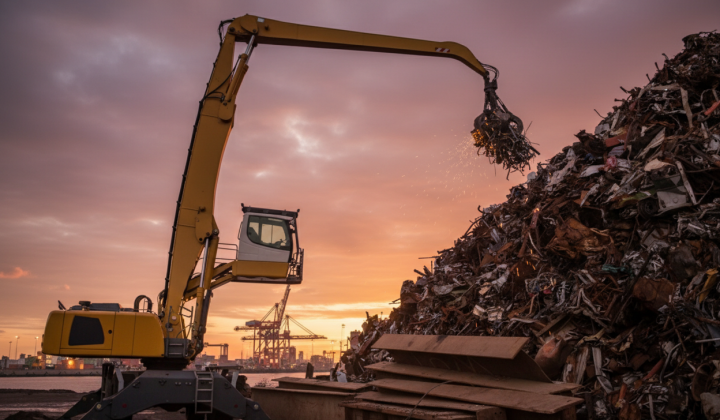
According to Главком: An analysis by the GMK Center reveals that a Ukrainian government decision to impose a zero-export quota on scrap metal for 2026, announced in late 2025, did not create a raw material deficit for Poland's steel industry. This outcome was primarily due to Poland's own substantial domestic scrap reserves and its ability to source imports from other European Union nations. The European scrap market is highly integrated, allowing for such adjustments in trade flows.
While scrap collection in Ukraine had more than halved in recent years to around 2 million tons, the country's scrap exports in 2025 reached a four-year high. During the same 2024–2025 period, Poland was collecting between 6.5 and 6.8 million tons of scrap annually, with domestic consumption at 4.4–4.5 million tons. Ukrainian scrap accounted for no more than 5% of the Polish market, indicating its minor role in the overall supply balance.
Impact on Polish Steel Production
Polish steel output has also been on a downward trend, falling from 10.8 million tons in 2018 to approximately 7.2 million tons in 2025. Polish steelmakers have duty-free access to purchase scrap from Germany and the Czech Republic, enabling them to offset any loss of supply from Ukraine.
Most of the Ukrainian scrap imported into Poland was subsequently re-exported to Turkey. This highlights the ability of Polish traders to increase scrap exports to non-EU countries. For context, Ukraine's export duty on scrap was €180 per ton, while Ukrainian exporters of ferrous scrap paid an average of 50 UAH in taxes per ton.
Serhiy Povazhniuk, an expert in the field, notes that exporting scrap brings Ukraine 280 times less in tax revenue than processing it domestically.
Ukrainian metallurgical plants that process scrap pay over 7,500 UAH in taxes per ton, and when payments from related industries are included, taxes can reach up to 14,000 UAH per ton.
Therefore, it is clear that the ban on Ukrainian scrap exports did not trigger a raw material shortage in Poland, with evidence pointing to the stability of its market. Emotional accusations directed at Kyiv's officials are not supported by the facts. Similar to the situation with Poland's ban on Ukrainian agricultural imports, monitoring found no significant damage to Polish farmers. This suggests political motivations behind such claims, which are disconnected from market realities.
This situation underscores the importance of diversifying raw material sources for the steel industry, both in Ukraine and Poland. With access to multiple supply channels, Poland successfully avoided negative impacts from the Ukrainian export ban. Overall, the European scrap market remains dynamic, with countries finding ways to adapt to changes in foreign trade, which can positively influence their economic stability.

Read also