U.S. Deputy Defense Secretary Calls on Europe to Lead Ukraine's Re-Armament Under 'NATO 3.0'

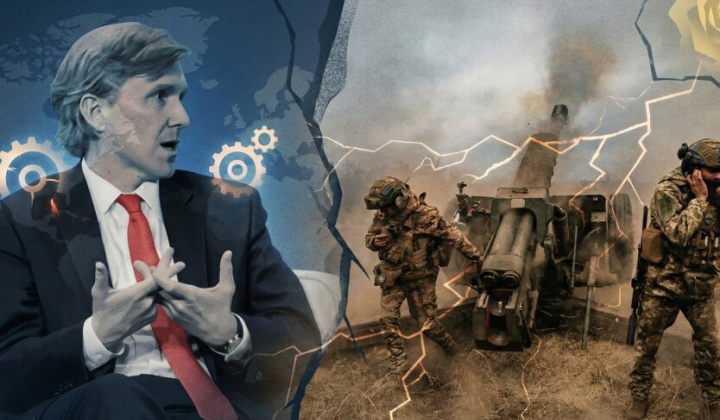
Address by Elbridge Colby
According to ХВИЛЯ: Elbridge Colby, the U.S. Deputy Secretary of Defense, outlined a vision for 'NATO 3.0' during a speech at the Council on Foreign Relations. His remarks came against the backdrop of the joint U.S.-Israeli military operation 'Epic Fury' against Iran. Colby stressed that prosperous European allies must assume primary responsibility for their own conventional defense and for arming Ukraine via the Prioritized Ukraine Requirements List (PURL). He also detailed U.S. military objectives in Iran, strategy toward China, the challenge of simultaneous conflicts, and the need to expand the defense industrial base. This speech signals a significant potential shift in burden-sharing within the transatlantic alliance.
Elbridge Colby, the principal advisor to the U.S. Secretary of Defense on defense and foreign policy, led the development of the 2026 National Defense Strategy. His address followed just days after the start of 'Epic Fury'. A day before the speech, the American submarine USS Charlotte torpedoed an Iranian warship in the Indian Ocean, marking the first torpedo sinking of an enemy vessel since World War II. Colby noted that
“we are completely focused on ensuring the President has the capabilities to meet the standard set by the National Security Strategy”
.
The 'NATO 3.0' Concept
The 'NATO 3.0' concept envisions wealthy European allies taking the lead in their own conventional defense. Under this framework, Europe would be responsible for supplying Ukraine with weapons through the PURL mechanism. Colby has been personally involved in discussions on securing arms for Ukraine via this list. He outlined U.S. military goals in Iran, which involve destroying Tehran's power projection capabilities, including missiles, kamikaze drones, and naval forces. The National Defense Strategy identifies the Islamic Republic of Iran as a threat to the U.S. and its allies, with a key military challenge being the threat of simultaneous or near-synchronous actions by potential adversaries.
In his speech, Colby also addressed defense budgeting, proposing a $1.5 trillion budget. He noted that Germany plans to increase defense spending to 4% by the end of the decade, while South Korea has agreed to a 'new global standard' of 3.5%. Colby emphasized that
“the United States has an unmatched military, but we have limits”
, adding that 'potential positive effects of the operation in Iran' could include complicating oil supplies to China and cutting off drone supplies to Russia.
Threats emanating from Iran include its nuclear ambitions and conventional missile forces. Offering his perspective, Colby remarked that
“if you asked Henry Kissinger, he would call this the epitome of failed American diplomacy”
. Through his address, he underscored the critical importance of building up European military capacity, regardless of whether the war continues or ends.
Elbridge Colby's speech points to a recalibration of U.S. military strategy, particularly in strengthening Europe's role in ensuring its own security and supporting Ukraine. The 'NATO 3.0' concept may indicate a drive toward greater autonomy for European allies in defense matters, which could reshape relations between the U.S. and NATO. Amid growing threats from Iran and China, such a strategy could prove pivotal for ensuring regional stability and reducing reliance on American military resources.

Read also