Earth's Core Reverses Flow Direction Beneath the Pacific Ocean

Satellite Data Analysis
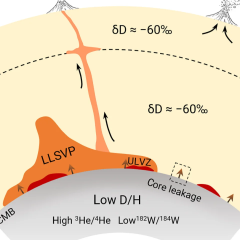
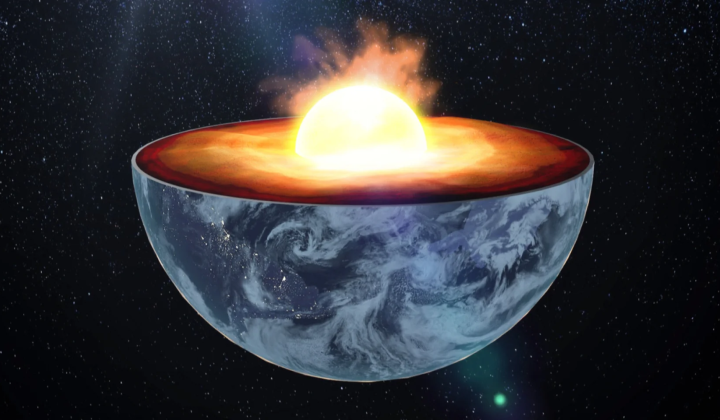
According to НВ — Техно: An analysis of satellite records has revealed that around 2010, roughly 5% of the outer core's flow beneath the Pacific Ocean shifted from moving west to moving east. This finding, published in the Journal of Studies of Earth's Deep Interior, stems from research covering satellite data collected between 1997 and 2025, including key events during that timeframe. The Earth's outer core is a layer of molten metal surrounding the solid inner core, and its movements generate the planet's magnetic field.
Specifically, 2010 saw a disruption in the 5.8-year cycle of day length. This flow reversal under the Pacific raises fresh questions about the behavior of Earth's deep interior. Geologist Frederik Dahl Madsen of the University of Edinburgh noted that the discovery prompts major inquiries into how the planet's deepest layers are dynamically interconnected.
“This study raises intriguing questions about the relationships between Earth's deepest layers.”
Elisabetta Yorfida, Research Scientist, ESA Swarm Mission
In 2017, satellites also detected a series of geomagnetic pulses, further underscoring the importance of these investigations. Scientists aim to determine whether this reversal is a short-term fluctuation, part of a recurring oscillation, or a new stable equilibrium. Processes deep within the Earth pose no direct threat to humans, but their impact on the magnetic field and the geodynamo-the liquid metal at the planet's core-remains a focus for ongoing study.
Potential Implications of the Discoveries
These findings could significantly advance our understanding of the geodynamic processes taking place deep inside the planet. Shifts in outer core flow may influence Earth's magnetic field, which in turn can affect climatic conditions and geological activity. Further research in this area could help scientists better grasp not only the internal structure of the Earth but also its effects on surface phenomena such as earthquakes and volcanic eruptions.

Read also