587 Unfinished Castle Villas in Turkey Now Abandoned as Developer Disappears

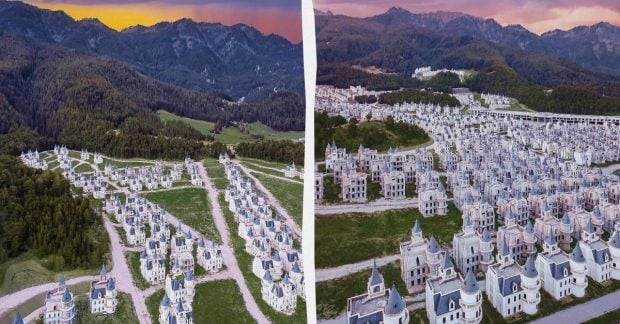
The Burj Al Babas Project
According to УНІАН — Туризм: A luxury residential complex in Turkey known as Burj Al Babas was originally planned to include 732 castle-like villas. However, financial, legal, and economic troubles have left the project incomplete. As of 2026, 587 of those villas remain unfinished, and the developer, Sarot Group, has vanished with no signs of resuming work.
The name Burj Al Babas comes from Arabic, meaning 'Babas Tower,' and refers to the nearby Babas thermal springs. The complex was designed to feature 732 three-story Gothic-style villas inspired by Istanbul's Galata Tower and Maiden's Tower. Each villa was meant to have its own private indoor pool supplied with thermal water. Plans also included a dome complex with a shopping mall, mosque, cinema, and Turkish hammam. Villa prices ranged from $370,000 to $530,000, and nearly half were sold before construction ended, mainly to buyers from Gulf countries.
Construction Challenges
Work began in 2014 and was scheduled for completion within four years. But contractors faced accusations of violating environmental regulations when disposing of construction waste. Workers protested over unpaid wages, and many subcontractors left the project, taking legal action to recover debts. The situation worsened after Turkey’s failed 2016 coup attempt, adverse weather, and economic instability. Sarot Group declared bankruptcy, and by 2022 not a single villa had been finished.
In 2024, the project gained renewed attention when the Emir of Kuwait visited Turkish President Recep Tayyip Erdogan, and Burj Al Babas came up in their discussions. Sarot Group representative Adem Tekgöz claimed construction had been paused due to a harsh winter but would resume the following summer. Yet as of 2026, no work has restarted, and Sarot Group has disappeared from public view.
Meanwhile, in Italy, 69-year-old Franco Malosso-also known as Franco Malosso von Rosenfranz-charged 40 euros for tours of a so-called Berico Marine Amphitheater in Vicenza. He claimed the structure dated to 393 AD and was among the oldest and largest in the world. This case shows how other entrepreneurs may also exploit tourist attractions in ways similar to what happened with Burj Al Babas.
The Burj Al Babas fiasco reflects broader issues in Turkey's real estate sector, especially the risks investors and buyers face from financial instability and weak enforcement of construction standards. This situation underscores the need for thorough background checks on developers before committing to large housing projects.
Similarly, the Franco Malosso case in Italy highlights how ethics and transparency problems can arise in the tourism industry, damaging the sector’s overall reputation. Both examples emphasize the importance of stronger regulatory safeguards to protect consumers and investors.
The challenges faced by the Burj Al Babas project highlight a troubling trend in large-scale developments, similar to the recent case in Italy where a man was sentenced for creating a fabricated ancient Roman amphitheater. Such incidents raise questions about the integrity of developers and the protection of investments in high-profile projects. To learn more about this intriguing legal case, read our article on the fabrication of historical landmarks.

Read also