How to Properly Dry and Store Firewood: Choosing the Right Species and Legality of Harvesting

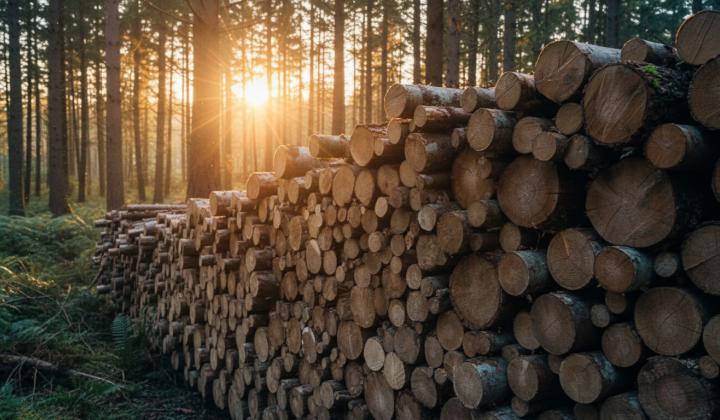
How to Properly Dry and Store Firewood
According to ХВИЛЯ: Proper storage of firewood is a key factor in ensuring quality heating. Freshly cut wood has a moisture content of over 50%, which significantly reduces its heat-generating properties. To achieve maximum heat output, firewood must be dried to a moisture level of 20%. In this context, it is important to choose the right species of wood that will ensure effective burning.
The leaders in heat generation are hard deciduous species, such as:
- hornbeam
- beech
- oak
These species, due to their density, provide about 2100-2400 kcal/dm³. Coniferous species, although less effective, have a heat generation of around 1600-1700 kcal/dm³. Among the best options for heating are not only oak and beech but also ash and hornbeam. For those looking for more budget-friendly options, poplar, willow, and aspen are worth considering.
Storing Firewood and Legality of Harvesting
Storing firewood also requires proper attention. It is important that firewood is stored under a canopy or in a wood shed, protected from snow and rain. There must be ventilation on the sides. As noted by an expert in this field, Mykola Kovalенко:
“Firewood should be stored under a canopy or in a wood shed, protected from snow and rain. There must be ventilation on the sides.”
Moreover, an important aspect is the legality of harvesting firewood in Ukraine. Fines for illegal logging and damage to forests range from 510 UAH, highlighting the need to adhere to legal norms when harvesting timber. For the convenience of consumers, there is a government online store 'Drovaye', which allows ordering up to 15 cubic meters of wood.
Proper drying and storage of firewood not only affects heating efficiency but also the environmental situation in the country. Adhering to legislation regarding timber harvesting is an important aspect that helps preserve forest resources. Given the growing demand for firewood, proper organization of harvesting and storage becomes particularly relevant, as it contributes both to resource savings and to environmental protection.

Read also