Japanese Researchers Develop Compact Sensor Achieving Over 80% Accuracy in Amino Acid Identification

Innovative Electric Sensor for Amino Acid Detection
According to НВ — Техно: A collaborative research team from Osaka University in Japan has engineered a small-scale electric sensor capable of distinguishing amino acid structures with an accuracy exceeding 80%. This breakthrough offers a promising new tool for astrobiologists searching for signs of life beyond our planet. The sensor operates by detecting variations in tunneling current between two gold nanowires. Crucially, it identifies the chirality of amino acids-molecules that exist in two mirror-image forms, L and D-for the first time at the single-molecule level.
Testing Results and Future Applications
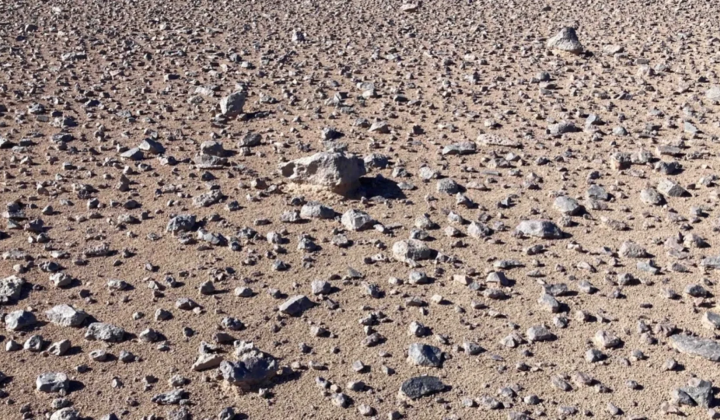
The device has already undergone testing on samples from the Murchison meteorite, found in Australia, and soil from Chile’s Atacama Desert. Researcher Takahito Oshiro highlighted that the
“accuracy in differentiating the two forms surpassed 80%”
, marking a significant advancement compared to conventional methods like liquid chromatography coupled with mass spectrometry, which tend to be bulkier and more resource-intensive. Although the new sensor is more compact and requires less sample preparation, it is limited to analyzing physical samples and cannot remotely detect life.
Plans are underway to refine this technology for deployment in space exploration missions. Masateru Taniguchi noted that
“both techniques successfully identified key characteristics of amino acid compositions in the tested materials”
. Before being sent to space, the sensor must be adapted to recognize a broader range of molecules, paving the way for enhanced astrobiological investigations.
This advancement holds the potential to transform how scientists search for extraterrestrial life, as accurately identifying amino acids is vital to understanding fundamental biochemical processes. Successful trials with extraterrestrial samples underscore the sensor’s promise for future missions to planets like Mars or icy moons such as Europa, ultimately contributing to a deeper comprehension of life’s possibilities beyond Earth.
As researchers continue to explore innovative methods for detecting signs of life, the development of an AI-powered nanoelectronic sensor offers another promising avenue. This technology complements the recent advancements in amino acid identification, further enhancing our understanding of astrobiological possibilities and the search for extraterrestrial life.

Read also