Arestovych Admits His War Predictions Were Wrong

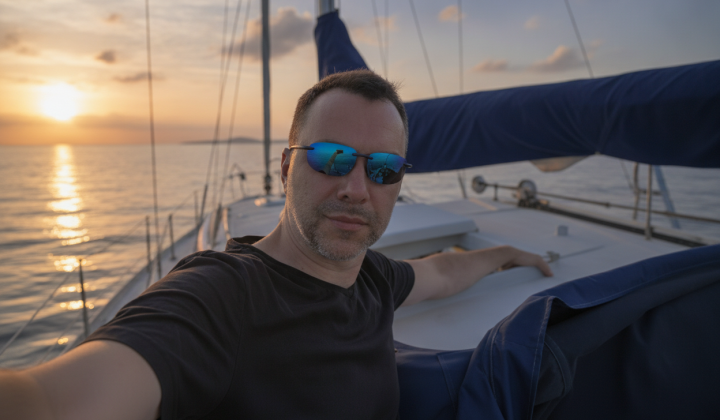
Oleksiy Arestovych Acknowledges His Mistakes
According to Главком: Oleksiy Arestovych, a former informal advisor to the head of the Ukrainian President's Office, has publicly acknowledged that his forecasts regarding the full-scale war were incorrect. He stated that his biggest errors included:
- overestimating the rationality of Russian leadership
- believing in a European civilizational path
- misjudging the West's capacity to respond
- underestimating Ukraine's resilience
The scale of changes since the start of the full-scale invasion has exceeded expectations-not only his own, but also those of many Western think tanks.
Government Response and Impact on Society
Ukrainian President Volodymyr Zelenskyy enacted a National Security and Defense Council (NSDC) decision imposing sanctions on Oleksiy Arestovych and Myroslav Oleshko. Arestovych served as an informal advisor to the head of the President's Office from December 2020 until January 2022, when he left his position amid a major scandal.
'What this war has taught me is to say more often: I don’t know. Predicting this war with half-year precision turned out to be far easier than correctly assessing its course.' Oleksiy Arestovych
Arestovych noted that he does not regret his mistakes, as they have provided him with valuable lessons. 'My biggest mistakes: believing in Russia’s rationality, the European civilizational perspective, and the Ukrainian phenomenon-because it seemed that a rotten and inefficient system should not have survived five years of war, let alone launched a counteroffensive,' he added.
In his recent broadcasts, the former advisor predicted Ukraine's defeat in the war against Russia. Arestovych also made a series of controversial statements, including:
- suggesting a joint prayer with Putin
- advocating for territorial concessions to Russia
- calling for a trial of Zelenskyy
His remarks sparked widespread public debate and became a valuable asset for Russian propagandists.
Arestovych's admission that his forecasts were flawed highlights the difficulty of predicting military conflicts and the rapidly changing situation in Ukraine. The government's decision to impose sanctions reflects its desire to distance itself from individuals who question the country's prospects during wartime. This case also underscores the responsibility of public figures for their statements in the context of an ongoing war and their potential impact on society. Such remarks can have serious consequences-not only for personal reputations but also for the morale of the entire nation.
As the conflict continues to evolve, the implications of Arestovych's admissions are significant, particularly in light of recent actions taken by Ukraine's judicial system. The seizure of assets from Russian oligarchs underscores the government's commitment to addressing corruption and the ongoing war's impact on national security. Understanding these developments can provide deeper insights into the broader context of Ukraine's resilience and strategic responses.

Read also