A Rare Royal Seal from the Kushan Empire Has Been Unearthed in Tajikistan

Rare Kushan Royal Seal Found in Southern Tajikistan
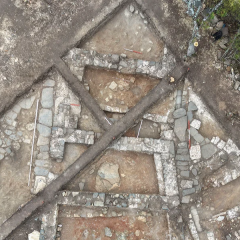
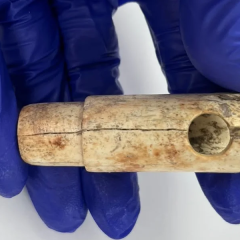
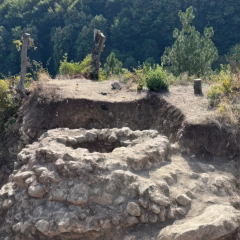
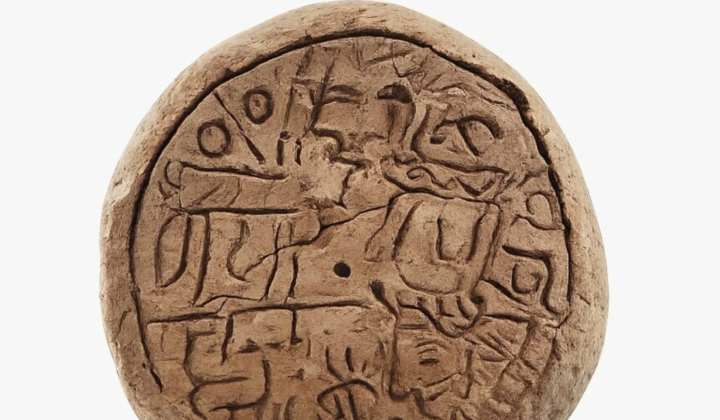
According to НВ — Техно: Archaeologists working with the National Museum of Tajikistan have uncovered a rare royal seal made of fired clay at the Sayyod site in the Khatlon region of southern Tajikistan. The artifact stands about 5 centimeters tall, with a stamping surface roughly 6 centimeters in diameter. It is beige and consists of a perforated handle attached to a round stamping face. Specialists in the museum's archaeology and numismatics department are currently analyzing and interpreting the object, though questions about its original owner, exact production date, and administrative role are still unresolved.
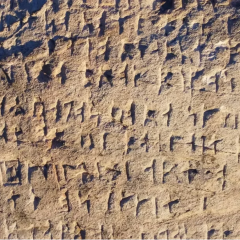
What makes the seal especially notable is its decoration. It carries a Bactrian inscription, geometric patterns, the bust of a ruler wearing a crenellated crown, mountain goats, and symbols linked to Kushan royal authority. The imagery is arranged in reverse, as expected on a stamping implement. This combination of elements makes the find a major addition to research on the Kushan period.
Why the Kushan Empire Matters
The Kushan Empire rose in Bactria and developed into one of the leading political powers of Central and South Asia during the early centuries CE. Its territory extended into parts of what are now Central Asia, Afghanistan, Pakistan, and northern India. Under Kushan rule, Bactrian-written in a modified Greek alphabet-served as an important language of administration. Kushan lands also formed part of exchange networks that linked China and Central Asia with India, Iran, and, indirectly, the Roman world. For readers less familiar with this era, the Kushans were a major Silk Road civilization whose influence stretched across vast regions.
The Sayyod seal may also contribute to economic history, although there is as yet no proof that it was directly used in trade. In ancient administrative systems, seals served several purposes, such as:
- authenticating documents
- identifying officials or owners
- securing containers
- labeling goods
This discovery opens fresh avenues for understanding political authority and governance in the Kushan Empire and offers valuable material for future studies. It also highlights Tajikistan's significance in the history of ancient Asia, reflecting the cultural exchange and administrative sophistication that characterized the Kushan world. Finds of this kind deepen knowledge of political structures while potentially illuminating the economic and social life of ancient Bactria.

Read also