Secret Tunnel Network Discovered Beneath Neolithic City in China by Archaeologists

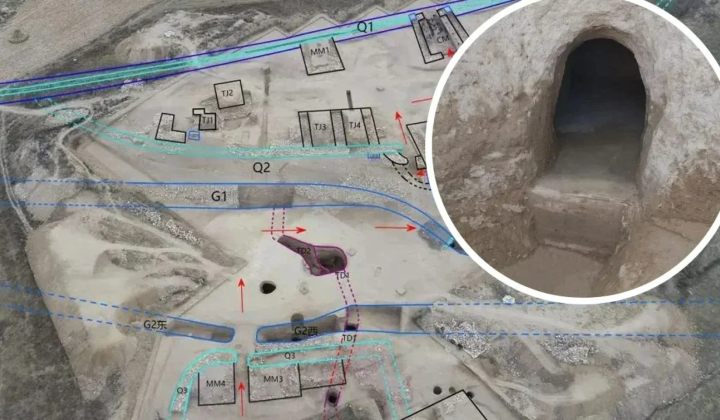
Underground Passageways Found Under the City of Houchengzui
According to НВ — Техно: July 10, 09:30
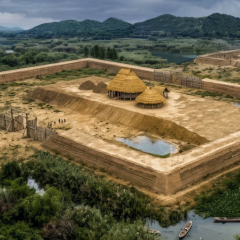
A network of six interconnected tunnels has been uncovered beneath the Neolithic stone city of Houchengzui, located in Inner Mongolia, China. This ancient settlement, dating back 4,300 to 4,500 years, was first identified in 2005, with excavations beginning in 2019. Preliminary research suggests these passages, which reach depths of up to 6 meters, were likely used for both military and economic purposes.
City Layout and Construction Details
Spanning approximately 340 acres, Houchengzui mirrors two other ancient Chinese stone cities-Bicun and Shimao. Archaeologists have determined the tunnels stand about 180 cm tall and 120 cm wide, with their shallowest point lying 150 cm below the surface. They follow a circular pattern from the city's center outward, featuring arched ceilings and uniform dimensions.
The above-ground design included a three-tiered structure comprising:
- an inner city,
- an outer city,
- walled gates.
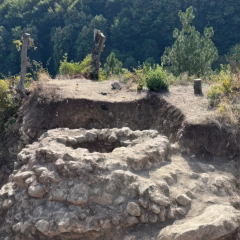
Key gateways are the Main City Gate (in the outer city), the Urn City Gate, and the Outer Urn City Gate. Trenches were placed around the gates and walls. One tunnel runs from the inner barbican to the city's exterior, while another connects to a moat. Some passages extended beyond the defensive wall.
Sun Jinsong, director of the Inner Mongolia Academy of Cultural Relics and Archaeology, noted: 'One leads from the inner barbican to the outer part of the city, and another is connected to the moat.'
This discovery highlights the value of archaeological research in understanding China's ancient civilizations.
The finding of tunnels beneath Houchengzui underscores the sophistication of architectural and technological achievements among China's Neolithic cultures, as well as their military and economic strategies. Studying such ancient centers of civilization can shed light on the development of social structures and technologies in the region. Additionally, the planned presentation of findings on the Qin Dynasty Imperial Road in 2025 will offer further opportunities to explore China's history and cultural heritage.
This remarkable discovery at Houchengzui is reminiscent of other significant archaeological finds in China, such as a 3,000-year-old feudal estate that revealed thousands of tombs. These sites collectively illustrate the complexity and richness of ancient Chinese civilizations, shedding light on their societal structures and burial practices.

Read also