Arctic glaciers lost a record 61.7 gigatons of ice in six weeks

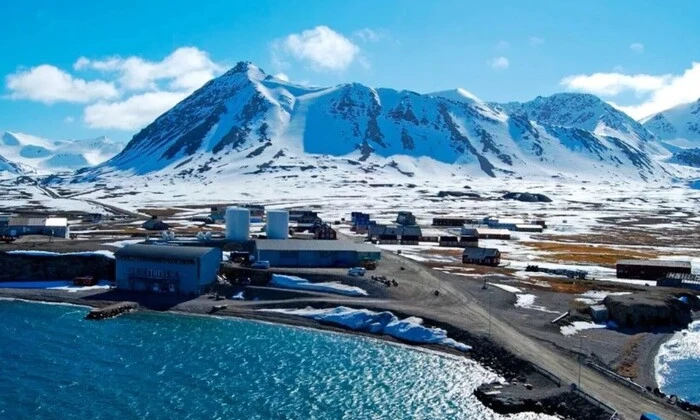
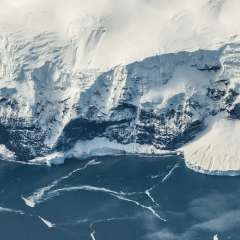
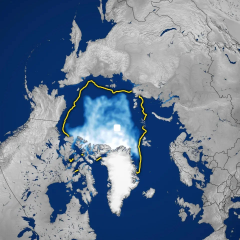
According to glavcom.ua: According to a new study published in the scientific journal PNAS, glaciers on the Svalbard archipelago experienced record melting in the summer of 2024, losing about 61.7 gigatons of ice. This extreme figure serves as a 'window into the future' for large-scale melting of Arctic glaciers in a warmer world. This was reported by 'Glavkom' citing pnas.org.
The study showed that the massive loss of ice, corresponding to approximately 1% of the total ice volume on the archipelago, occurred over just six weeks due to abnormally high air temperatures. Scientists claim that this rapid melting contributed to a 0.16 mm rise in global sea levels.
The study indicated that the heat raised the average temperature on the archipelago in August from 7 to 11 degrees Celsius. To assess the consequences, scientists measured the ice level on-site and using satellite images, as well as calculated loss rates since 1991.
In total, together with neighboring regions in the Barents Sea, 102 gigatons of ice were lost during the heat wave. This caused a rise in global ocean levels by 0.27 millimeters. At the same time, melting alone on Svalbard accounts for 0.16 millimeters. This makes the region one of the largest 'donors' of sea level rise in the world for 2024.
The extreme climate regime observed on Svalbard is statistically rare for current climate conditions. However, the authors of the study predict that similar phenomena will become increasingly frequent over the next few decades.
Catalog of Antarctic underwater canyons
Meanwhile, an international group of scientists from the University of Barcelona and University College Cork has created the most detailed catalog of underwater canyons in Antarctica. The study, published in the journal Marine Geology, identified 332 colossal underwater canyons, some of which reach more than 4,000 meters deep.
We remind you that the UK government allocated over $13 million for a scientific experiment in the Arctic. It will take place on Victoria Island in the Canadian Arctic archipelago.
The conducted research indicates a record melt of ice on Svalbard in 2024, which has serious implications for the climate and global ocean levels. Scientists warn that such phenomena may become more widespread in the future.

Read also