Droughts and Failed Harvests Loom as 2026 Predicted to Bring a Record-Breaking Super El Niño


Risks to Agriculture and Coral Reefs
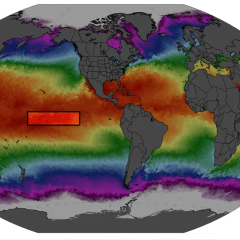
According to НВ — Техно: Climate scientists are sounding the alarm over the potential scale of a super El Niño. This climate pattern, driven by unusually warm surface water in the tropical Pacific, can disrupt rainfall and temperatures around the globe. The event taking shape in 2026 could turn out to be the most intense ever recorded, surpassing the 1997–1998 anomaly, according to current forecasts. Ocean warming in the Pacific has already accelerated beyond what worst-case projections had anticipated. NOAA declared the onset of El Niño in early June after sea-surface temperatures in the central and eastern tropical Pacific climbed at least 0.5°C above the historical average. By the first week of August, that margin had grown to 2.6°C. Berkeley Earth climatologist Zeke Hausfather said the data confirms the forecast:
any reading above 2°C fitting the definition of a super El Niño, and the present pace of development being completely unprecedented
.
What Could Happen Next
Most climate models project the anomaly peaking in late 2026. Expected impacts include extreme heat, drought, and destructive flooding. Weakened monsoons and reduced rainfall could hit Southeast Asia, Indonesia, Eastern Australia, India, and Southern Africa. Such conditions pose a serious threat to global agriculture, with possible harvest failures endangering food security.
The warming of ocean waters may also trigger widespread coral bleaching and die-off, adding a major environmental dimension to the crisis. This El Niño is unfolding on top of long-term global warming driven by human activity. Researchers are therefore urging governments, particularly in tropical countries, to start preparing response measures now so that people and ecosystems face lower risks.
The emerging El Niño highlights the need for coordinated international action on climate change. Because its effects could ripple through food supplies and natural systems far beyond directly affected regions, early mitigation and adaptation efforts are essential. As the risks intensify, countries must accelerate such measures to shield communities and the environment from the worst possible outcomes.
The looming threat of an unprecedented super El Niño in 2026 not only raises concerns for agricultural stability but also highlights the urgent need for awareness about its potential record-breaking intensity. For a deeper understanding of how this climatic phenomenon may surpass all previous events, you can read more about the upcoming challenges in the 2026 El Niño's historical context.

Read also