Church Attendance in Russia Hits Record Low Under Putin's Presidency

Declining Participation in Religious Services
According to Главком: Sociological data reveals a significant decline in religious service attendance among Russian citizens, now reaching 55%. This figure represents the highest level of non-attendance recorded during Vladimir Putin's entire presidency. For the first time since 1997, the share of people who do not attend services has surpassed the number of believers who participate. Compared to June of last year, this indicator has grown by 11 percentage points. Since July 2020, when a low of 29% was recorded, the proportion of respondents who do not attend church has increased by 26 points.
Contemporary Religious Practices
Among those surveyed:
- 16% attend religious services at least once a month;
- another 16% attend several times a year;
- only 7% go to church once a year or less frequently.
The highest level of non-attendance was recorded in 1991 at 69%. Conversely, the minimal share of those participating in services was 31% in the same year.
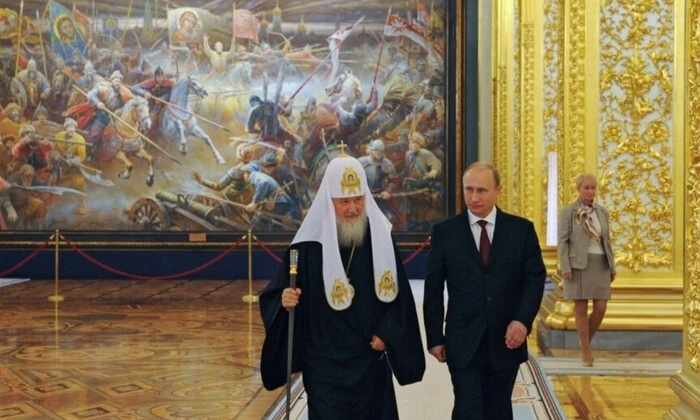
The Russian Orthodox Church (ROC) openly supports Kremlin policy and the war against Ukraine. Patriarch Kirill has repeatedly justified Russia's invasion. Following the announcement of mobilization, he effectively promised 'redemption of sins' to those participating in combat. Furthermore, the ROC has transformed religious canons into a propaganda tool, initiating the process of canonizing military personnel who died during the full-scale invasion, proclaiming them 'martyrs'.
This trend is notable as the ROC has long been a central pillar of Russian cultural identity and state tradition. Thus, the sociological data points to a rise in non-attendance of religious services among Russians against the backdrop of the Russian Orthodox Church's active support for state policy and warfare. This may indicate a shift in religious sentiment within society and a potential departure from traditional religious values, especially in the context of political and social upheaval. The reduction in participation in religious practices could signal new challenges for a church that is already attempting to adapt to modern conditions, particularly through its connection with state institutions.

Read also