Boolean search – what it is and how to use it in recruiting

In the field of recruiting, there are many nuances. Special attention should be paid to boolean search in recruitment, as it is an important tool.
It is also important to understand what boolean search can do for IT recruiters and how to use it
What is Boolean Search?
In modern recruitment, the competition for talented specialists is becoming increasingly fierce, and the labor market offers a multitude of candidates with various professional skills and experiences. To quickly and effectively find suitable employees, recruiters need special tools that allow for optimizing the process of searching and sorting candidates. One of these tools is Boolean Search – a powerful method for information retrieval using logical operators. The use of Boolean search helps to significantly narrow down the search results, filtering out irrelevant data and focusing on candidates who best meet the specified criteria. This approach is especially relevant for recruiting platforms, search engines, and social networks, where the percentage of relevant resumes can be low.

Boolean Search allows recruiters to save time and resources while increasing the accuracy and speed of personnel selection. It is not just a technical capability – it is a strategic tool that enables the formation of a higher quality candidate database and rapid response to the company's needs for specific specialists.
Boolean Search – is a method of information retrieval based on the use of logical operators to combine keywords and phrases. The name comes from the British mathematician George Boole, who developed the foundations of Boolean algebra. In recruitment, Boolean Search is used to construct accurate queries that allow finding exactly those candidates who meet certain criteria: professional skills, work experience, education, and other job requirements.
Thanks to Boolean Search, chaotic browsing through hundreds or thousands of irrelevant resumes can be avoided, which often happens during regular keyword searches. This methodology allows combining search conditions so as to include necessary terms while excluding those that do not fit, significantly increasing the efficiency of the process.
How Boolean Search differs from regular candidate searches
Regular searches in recruitment usually involve entering one or several keywords into the search bar of a platform or search engine. In this case, the results may include thousands of irrelevant profiles, as the system does not understand the context and cannot combine criteria. Recruiters have to manually sift through suitable candidates, which takes a lot of time.

Boolean Search allows creating more complex queries by combining keywords using logical operators such as AND, OR, NOT. This enables finding candidates who match precisely defined criteria while excluding irrelevant options. For example, a recruiter may search for a Java developer with startup experience, excluding those who worked in corporate IT firms. This approach makes the search more accurate and systematic, allowing for faster identification of suitable specialists.
Main logical operators in Boolean Search
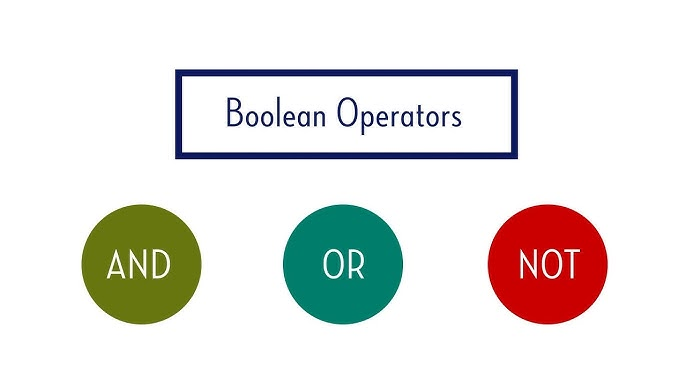
Boolean Search is based on the use of logical operators that define the relationship between keywords. The main operators are:
-
AND – used to include all specified terms in the search results.
-
OR – allows searching for candidates who have at least one of the specified terms.
-
NOT / - – excludes certain terms from the search.
-
Quotes "" – used for searching an exact phrase.
-
Brackets () – allow combining operators in complex queries.
These operators can be combined to create complex queries that help filter out irrelevant candidates and focus on those who best meet the job requirements.
How Boolean queries for recruiting are formed

Forming Boolean queries in recruitment begins with identifying the key requirements of the job: technologies, programming language, work experience, position, and specific skills. Then these terms are combined using AND, OR, NOT operators to create an exact query.
For example, to search for a front-end developer with experience in React and TypeScript, without Junior experience, a query can be constructed: ("Front-end Developer" OR "Frontend Engineer") AND React AND TypeScript NOT Junior
Such queries can be applied across various platforms: LinkedIn, GitHub, job portals, or in search engines like Google and Bing. For more complex selections, geographic, educational, and certification conditions can also be added.
Properly forming a Boolean query allows the recruiter not just to search for candidates by keywords, but to create an accurate picture of the desired profile while considering all important criteria simultaneously. This significantly reduces search time, increases the effectiveness of personnel selection, and allows the rapid closure of vacancies with a high level of candidate matching.
The impact of Boolean Search on the effectiveness of search and candidate selection
Using Boolean Search in recruiting significantly increases the effectiveness of search and candidate selection, as it allows for precise filtering of results based on various criteria. Thanks to logical operators, recruiters gain the ability not only to search for people using keywords but also to create multi-level queries that take into account experience level, specialization, location, and even specific skills.
For instance, when selecting a developer with specific technologies and the desired level of Senior, a regular keyword search may return hundreds of irrelevant resumes that mention the same technologies, but the candidates do not meet the qualification level or have different experiences. Boolean Search allows excluding unnecessary options using the NOT operator or minus (-), while simultaneously including all necessary parameters through AND and OR. This significantly saves recruiters' time and increases the likelihood of finding a candidate who is the best fit for the vacancy.

Another important aspect is the ability to combine multiple sources of information. Boolean queries can be applied on platforms like LinkedIn, GitHub, professional forums, or even in search engines like Google and Bing. This enables gathering a wide candidate base and forming a list of potentially suitable people from various resources. Implementing such an approach in companies often leads to reduced time to fill vacancies, increased accuracy of selection, and better compliance of candidates with employer requirements.
Moreover, Boolean Search contributes to enhancing the analytical component of a recruiter's work. When forming complex queries, specialists must thoughtfully consider keywords, synonyms, alternative job titles, and skills. This allows for a deeper understanding of the job market, available talents, and trends in the development of certain professions. In large companies with a constant flow of vacancies and a high level of competition in the labor market, this approach becomes indispensable for HR departments.
Common mistakes when using Boolean Search
Despite all its advantages, Boolean Search has its pitfalls, and inexperienced recruiters often make common mistakes that reduce the effectiveness of the search. One of the main mistakes is incorrectly using logical operators. For example, improper combinations of AND and OR or the absence of brackets in complex queries can lead to the system returning too many or, conversely, too few results. This often occurs due to haste or inadequate knowledge of the principles of constructing Boolean queries.
Another common issue is excessive specificity or overly broad queries. If a recruiter includes too many keywords using AND, they risk getting zero results, even if suitable candidates are available in the market. On the other hand, overly broad queries using OR can return hundreds of irrelevant profiles, complicating analysis and increasing time spent on sorting.
It is common to overlook synonyms and alternative job titles and skills. For example, for the position of "Front-end Developer", candidates may use titles like "Frontend Engineer", "UI Developer", or "Web Developer". Failing to account for all variants can overshadow some potentially suitable candidates.

Another mistake is the lack of regular updates to queries. The job market changes rapidly, with new technologies and specializations emerging. If Boolean queries are not adapted to modern realities, recruiters risk losing the chance to find current candidates and spending time on outdated profiles.
To avoid these mistakes, recruiters are recommended to test queries on different platforms, analyze the results obtained, add alternative keywords, and use brackets for the correct combination of operators. It is also useful to save effective query templates for reuse, which significantly speeds up the searching process in the future.
In conclusion, correct usage of Boolean Search enhances the quality of personnel selection and reduces the time to close vacancies, while knowledge and avoidance of common mistakes allow recruiters to apply this tool as effectively as possible in their daily practice.

Read also