Russian Drones on 50 km of Fiber Optics: Engineer Explains Why It Is Technical Waste

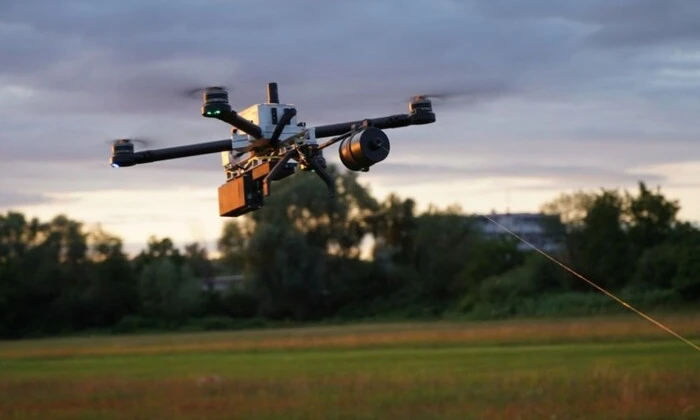
According to glavcom.ua: Russian claims about the development of long-range FPV drones on fiber optics with a range of up to 50 kilometers run into the limitations of the laws of physics. Igor Antonov, an optical engineer and volunteer, explained why this 'breakthrough' may have very limited military application.
Fiber Optics - It's Glass, Not Nylon
Antonov explained that fiber optics consist of glass, silicon dioxide, and various additives. Such glass is produced by molding liquid glass mass through holes in metal plates. The highest quality fiber optics are made in the USA, UK, Czech Republic, and Taiwan, while the quality in China is slightly worse. It is not produced at all in Russia and Ukraine.
Brittleness and Bending Issues
Fiber optics is not a strong material. Even in high-quality manufactured fiber optics, there is a risk of reliability. The cable for controlling FPV drones usually has a very thin shell compared to fishing fiberglass.
Why Do Russians Talk About 50 km
Antonov believes that the number 50 km was chosen for the standard length of a raw material spool, not for the capabilities of the fiber optic cable. To carry such a quantity of fiber optic spools, large batteries and a strong frame are needed. There is also an increased risk of cable entanglement over long distances due to water obstacles.
We once tested an FPV drone. It was supposed to fly 20 km, but it broke down one and a half kilometers from the starting point. Fiber optics is not the strongest material - small breaks occur easily. Thus, if a heavy load is suspended on it, it will withstand about 2 kg, and anything more than that will tear it apart.
Using FPV drones at such a long distance may be impractical from a military standpoint, as it requires a large volume of drone and risks losing the signal right in the middle of the flight.
Developing long-range FPV drones on fiber optics with a high flight range is a complex task due to the physical limitations of fiber optic cables and their brittleness. And considering the high risks of losing signal and cable entanglement, the capabilities of such drones in military applications may be limited.

Read also