A Global Government? Political Scientist and Economist Clash in Heated Debate

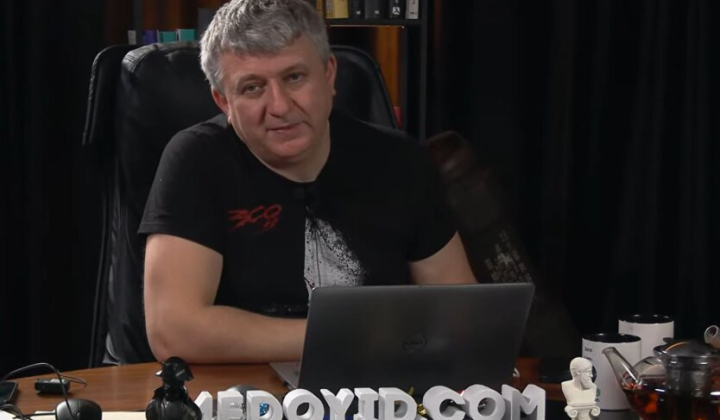
Debating the Idea of a World Government
According to ХВИЛЯ: Political scientist Yuriy Romanenko and economist Maksym Piven have engaged in a debate over the theory of a global governing body. Piven argued that international institutions like UNESCO, Interpol, and the WHO function as the de facto ministries of a world government. To support his claim, he pointed to the 2020 global consensus on mask-wearing during the coronavirus pandemic as evidence of such coordinated authority.
'Let me explain the 'world government'. This government is divided into ministries. For instance, it has a sort of 'ministry of culture' (UNESCO), an international police force (Interpol), and an international health ministry (the WHO), which, at the snap of a finger, can make everyone wear masks,' Maksym Piven
The Opposing Viewpoint
In stark contrast, Romanenko rejected this theory, citing the powerlessness of the UN in resolving major international conflicts, such as the Russian-Ukrainian war and US actions in the Middle East. 'There is no 'world government'. There are sovereign states that negotiate with each other. If there were a government, its commands would be obeyed. Trump came along and told their commands to go to hell,' Romanenko commented.
He further questioned why nations like Russia can ignore decisions supposedly made by this alleged global authority. 'If it exists, why can Russia tell this 'world government' to get lost, and why can a bunch of other countries do the same? What do they actually decide?' the political scientist asked.
Romanenko emphasized that international crises, like the war in Ukraine, are not resolved by a world government but rather in forums like the UN Security Council, where 'Security Council members haggle amongst themselves.'
- International problems are not solved at the level of a world government
- They are addressed in UN Security Council meetings
He also cast doubt on the legitimacy of representation in such a government, asking who specifically represents Ukraine or other nations in this context. 'Who is our representative in this government? Who specifically went there from Ukraine or from Poland?' he noted.
Romanenko stressed that while Ukrainian experts like Illya Kusa work at the UN, this does not mean Ukraine's issues are solved through a world government. 'Oh, we have Illya Kusa working at the UN. Great! He's a representative of the 'world government'. Now you understand through whom we will solve our problems,' he concluded sarcastically.
This exchange between Romanenko and Piven highlights fundamentally different perspectives on the role of international institutions in global governance and their effectiveness in tackling modern challenges. The debate reflects a long-standing tension in international relations between the ideals of global cooperation and the realities of national sovereignty. In an era of increasing interconnectedness, the question of how nations coordinate-or fail to coordinate-on critical issues remains more pressing than ever.

Read also