The Sources of Iran's Resilience: Why Military Strikes Fail to Cripple an Ancient Civilization

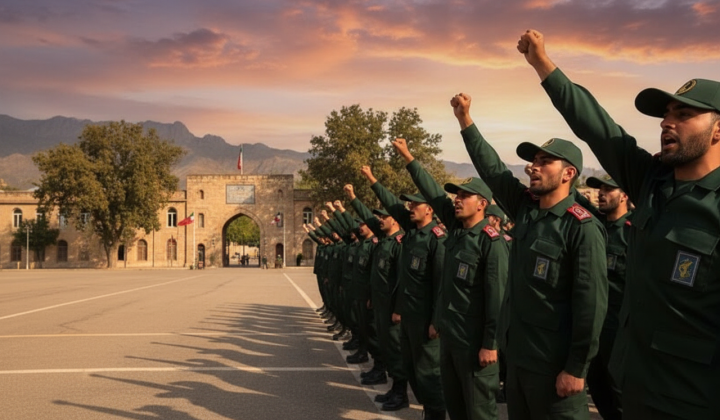
Iran's Durability in the Face of External Threats
According to ХВИЛЯ: Analyst Tigran Avakyan argues that strikes against command infrastructure cannot paralyze Iran, citing the decentralized structure of the Islamic Revolutionary Guard Corps (IRGC) and the historical resilience of Persian civilization. The IRGC is built on a principle of networked autonomy, enabling it to maintain functionality even during external attacks. This organizational strength is rooted in a society with millennia of experience in survival and recovery.
Iranian society possesses a thousand-year history of surviving and rebounding from military defeats. Persians have suffered defeats at the hands of Arabs, Greeks, and Ottoman Turks, yet consistently managed to preserve their distinct cultural identity. As Tigran Avakyan emphasizes,
“Iran is not Iraq, which T.E. Lawrence cobbled together from nothing a century ago, nor is it Syria, which never truly existed as a state.”
- Tigran Avakyan. This deep historical continuity provides a unique foundation for national cohesion.
The Organizational Structure of the Islamic Revolutionary Guard Corps
A key element within the IRGC's structure is its system of light infantry brigades. This highly effective organizational model features
“every sergeant capable of acting autonomously. Every lieutenant acts autonomously,”
notes Avakyan. This decentralization allows for rapid adaptation to changing battlefield conditions and preserves operational independence at the smallest unit levels.
Illustrating the resilience of Iranian civilization, the analyst compares it to the principles of judo:
“There is a tree upon which snow falls and it breaks. In judo, it is a branch. Snow fell, it bent down; the snow melted, and it stood back up.”
This metaphor underscores Iran's capacity for adaptation and recovery in the face of challenges.
Consequently, the combined effect of the IRGC's decentralized structure and Iranian society's profound historical experience renders the nation remarkably resistant to external threats. This supports Avakyan's view that achieving a rapid paralysis of Iran through military conflict is highly improbable.
This analysis highlights the critical importance of understanding Iran's unique military and social fabric within the context of contemporary geopolitical challenges. Iran's demonstrated resilience significantly influences regional stability and international relations, as the country continues to show an ability to withstand and adapt to pressure. This enduring capacity must be factored into the strategic calculations of other nations engaging with Iran on matters of security and diplomacy.
Understanding Iran's complex military and societal dynamics is crucial, especially when considering the implications of potential conflicts. For a deeper analysis of why a direct confrontation with Iran may extend beyond initial expectations, explore the insights from an analyst who outlines three critical factors that contribute to the enduring nature of Iran's resilience in the face of external pressures.

Read also