The 1986 Chernobyl Disaster: How Soviet Authorities Concealed the True Radiation Levels

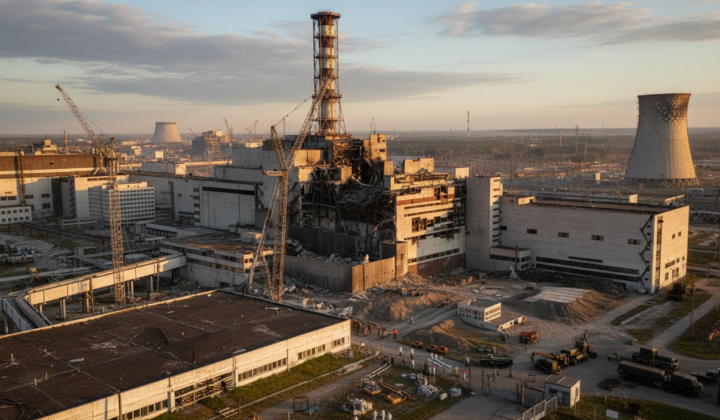
The Chernobyl Catastrophe
According to Главком: On April 26, 1986, a man-made disaster struck the fourth reactor unit of the Chernobyl Nuclear Power Plant in the Kyiv region. Explosions destroyed the reactor, triggering a fire and a massive release of radioactive material. The evacuation of Pripyat began 36 hours after the accident, and over 115,000 people were relocated from the 30-kilometer exclusion zone. Approximately 600,000 individuals took part in the cleanup efforts. Meanwhile, the Soviet leadership downplayed the disaster's severity, and top officials of the Ukrainian SSR were accused of falsifying radiation readings.
The accident resulted from an experiment that started at 01:23 on April 26. Just two minutes later, at 01:25, two explosions occurred within seconds of each other, igniting more than 30 separate fires. The main fires were contained within an hour and fully extinguished by 5:00 AM. However, the blaze in the central hall of the fourth unit continued until May 10. At the time of the explosion, 17 workers were inside the reactor building. Tragically, senior reactor operator Valery Khodemchuk was buried under debris, and adjuster Volodymyr Shashenok died from radiation exposure on April 26 itself. By May 20, 1986, another 11 employees had died at Moscow's Hospital No. 6, while 14 others were diagnosed with severe radiation sickness.
Aftermath and Reactions
The government commission that investigated the incident decided the next day to shut down units 1 and 2. By 8:00 AM on April 28, radiation levels at units 3 and 4 ranged from 1,000 to 2,600 microroentgens per second, while in some parts of the city, readings were between 30 and 160 microroentgens per second. A safe background level is considered up to 0.26 μSv/h. Nearly 8.5 million people were affected by radiation, and the total activity of radioisotopes was 30 to 40 times higher than that of the Hiroshima bombing. On the evening of May 1, winds from Chernobyl carried radiation back toward Kyiv, sparking further public concern.
On May 2, authorities ordered the evacuation of the 30-kilometer zone, and by May 6, over 115,000 people had been relocated. The Chernobyl plant first went online in May 1970, with initial accidents occurring in 1978 and 1979. Between 1983 and 1985, the facility experienced five accidents and 63 equipment failures, with the last incident before the disaster happening in February 1986.
On April 26, 1988, Kyiv saw its first unauthorized protest, where demonstrators called for:
- 'Remove nuclear plants from Ukraine'
- 'UKK for a nuclear-free Ukraine'
- 'We don't want dead zones'
- 'Nuclear plants: put to a referendum'
- 'Industry, land, water: under ecological control'
- 'A personal dosimeter for everyone'
On February 11, 1992, the Ukrainian Prosecutor General's Office opened a criminal case for abuse of power, accusing senior officials of falsifying actual ionizing radiation levels. However, the case was closed due to Shcherbytsky's death and the expiration of the statute of limitations. The Chernobyl disaster remains a profound scar on the history of Ukraine and the world, serving as a stark reminder of the dangers tied to nuclear energy.
As one of the most devastating industrial accidents ever, Chernobyl caused immense environmental, social, and economic damage. It fundamentally shifted public attitudes toward nuclear power and heightened awareness of the risks involved in nuclear technology. The lessons learned from the cleanup efforts are still studied by many countries aiming to prevent similar tragedies in the future.
As the Chernobyl disaster unfolded, the Soviet authorities not only struggled to manage the immediate crisis but also took steps to obscure the true extent of the radiation exposure. This concealment led to widespread public panic and misinformation in Kyiv and beyond. To understand the full scope of this cover-up and its impact on the affected population, explore how the government manipulated information during this catastrophic event in our detailed report on Chernobyl's concealed records.

Read also