The Critical HR Skill Gap: Why Digital Agility Is Now Essential

The Missing Competency: HR's Digital Agility Deficit
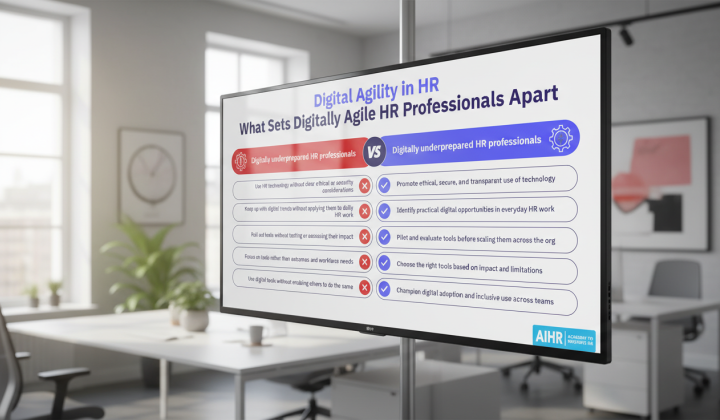
According to AIHR: In a global HR technology market valued at over $44 billion and projected to nearly double in the next decade, a crucial skills gap persists. The concept of Digital Agility-the ability to adapt and thrive using digital tools-is now fundamental for HR professionals. Yet, despite massive investments in HR tech, only 39% of HR practitioners report feeling confident using digital tools, making Digital Agility the lowest-rated core competency in the AIHR Future-Ready HR Skills report.
The Five Dimensions of Digital Agility
Digital Agility is composed of five key dimensions:
- Digital Awareness
- Technology Use
- Digital Security & Ethics
- Digital Collaboration
- Digital Readiness and Capability Building
The importance of these skills is highlighted by initiatives like the one from Henkel and Accenture, which provided digital training to over 10,000 managers. However, significant resistance remains, with one in seven employees refusing to use new tools and 39% identifying as reluctant users. This underscores a broader challenge in workforce adaptation that HR must lead.
Within the T-Shaped HR Competency Model, Digital Agility is one of six core competencies, alongside Business Acumen, Data Literacy, AI Fluency, People Advocacy, and Execution Excellence. Shifts in management skills further emphasize the need for adaptation in areas like communication, adaptability, problem-solving, decision-making, collaboration, and leadership. Industry experts such as Erik van Vulpen, Ryan Wong, and Meghan M. Biro consistently track these evolving trends, which are reshaping the HR function globally.
Consequently, Digital Agility has become a non-negotiable competency for HR professionals as technology reshapes human resources management. The soaring investments in HR technologies starkly highlight the urgent need to develop these digital skills, ensuring practitioners are prepared for the sector's emerging challenges.
Given the rapid pace of technological change, HR professionals must proactively develop their digital capabilities to remain relevant and effective. While new technologies hold immense potential to improve people management, their benefits can only be realized if HR teams are equipped to use them proficiently. Investing in training and adaptation to digital tools is no longer optional but a fundamental requirement for HR's successful operation in the modern business landscape.

Read also