Researchers Explained the Anomalies of Star Streams Without Dark Matter

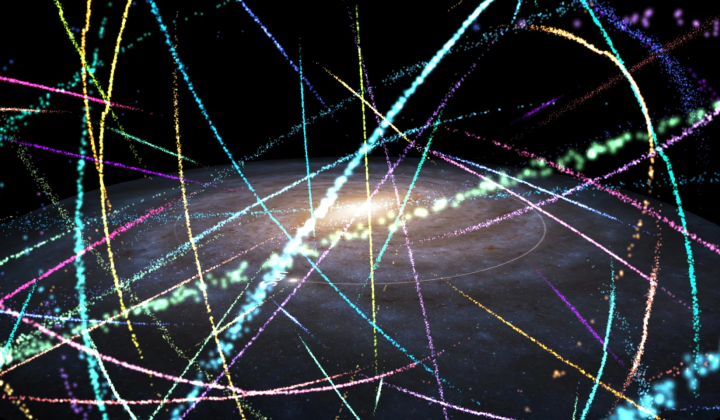
Gravitational Illusion
According to НВ — Техно: The Milky Way's own gravitational force can mimic dark matter. New computer modeling conducted by researchers from the University of Washington has shown that anomalies in the shape of star streams may be caused not by dark matter, but by an uneven distribution of mass and stars within the galaxy itself. The results of the study were published in the Astrophysical Journal on August 29 at 21:07.
Research and Results
The scientists created a simulation of four galaxies, roughly the size of the Milky Way, without clusters of dark matter. Approximately 15,000 star streams were placed in the simulated galaxies, and over 5 billion years of simulation time, only 70 of them remained completely smooth. The primary cause of the anomalies was identified as the uneven distribution of mass and stars in the galactic disk. Star streams are torn apart, branched, and distorted without the involvement of dark matter.
Although the results of the study do not disprove the existence of dark matter, they change the approaches to its further search. New observations using the Simonyi Survey Telescope at the Vera Rubin Observatory are planned for this purpose. Most galaxies are likely surrounded by long threads of stars that rotate around them and are known as star streams.
The research conducted by the University of Washington highlights the importance of rethinking traditional notions of dark matter and its role in the formation of structures in galaxies. The results may stimulate new research focused on studying the uneven distribution of mass and stars, which, in turn, could change our understanding of galaxy evolution. It also indicates that further observations may help clarify the mechanisms affecting the formation of star streams, which are relevant to astrophysics today.
As researchers continue to explore the complexities of our universe, new findings suggest that gravitational waves may provide insights into mysterious cosmic entities. For instance, a recent study reveals that echoes from dark stars could be captured in the gravitational wave background. This adds a further layer of intrigue to the ongoing investigation of dark matter and its implications for cosmic evolution. To delve deeper into this fascinating topic, read more about the potential traces of dark stars in the gravitational wave background here.

Read also