For the first time, researchers have fully mapped how a spacetime crystal collapses into a microscopic black hole.

A New View of Critical Collapse in Spacetime
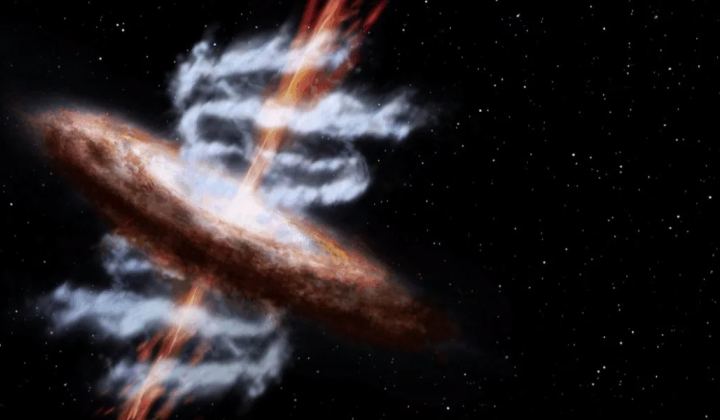
According to НВ — Техно: Scientists at TU Wien (Vienna University of Technology) and Goethe University Frankfurt have derived an exact mathematical description of the critical collapse of a spacetime crystal. Their analysis shows that a minute change in energy can push such a structure in one of two directions: it may disperse completely, or it may condense into a microscopic black hole. This marks the first time the process has been captured in a precise analytic formula, rather than requiring complex numerical setups.
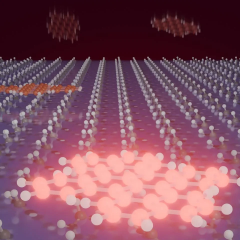
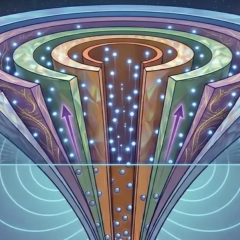
The idea that a critical collapse could trigger spontaneous black hole formation goes back to 1993, and earlier computer simulations supported that scenario. The new work simplifies the math by modeling the system in infinite dimensions, then adapting the result to ordinary four-dimensional spacetime. This is a striking example of a gravitational boundary state: one where spacetime arranges itself into a repeating, crystal-like pattern that sits exactly between dispersal and collapse. Adding a little extra energy makes the structure fall into a black hole; without enough energy, the crystal breaks apart.
Why This Matters for Early-Universe Physics
The researchers suggest that conditions reminiscent of their model could have existed in the extremely dense, energetic early universe. That connection raises the possibility that the mechanism is relevant to the formation of primordial black holes, a long-standing open question in cosmology. Because the new method is analytical, it may allow physicists to study black-hole formation more broadly without relying entirely on heavy computer simulations.
The findings, reported by ScienceDaily, open up fresh avenues in theoretical physics and astrophysics. Understanding how spacetime crystals behave at the threshold of collapse could illuminate not only early black-hole formation but other extreme cosmic processes as well. This framework offers a new mathematical foundation for future studies exploring phenomena that unfold under the most demanding conditions in the universe.
The implications of this research extend beyond mere theoretical considerations. Understanding how spacetime structures behave under extreme conditions could shed light on the formation of primordial black holes in the early universe. For more insights into how gravitational waves might provide clues about dark stars, check out this related article on the echoes of dark matter in gravitational waves.

Read also