Physicists Find a Way to Model Bird Flocks and Human Crowds


A Fresh Take on Non-Reciprocal Interactions
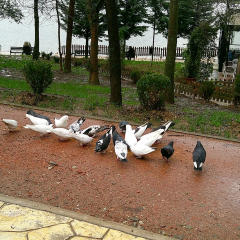
According to НВ — Техно: Researchers at the Max Planck Institute for the Physics of Complex Systems have unveiled a new theory that makes it possible to apply classical physics methods to systems where interactions go only one way. This breakthrough matters because traditional physics is built on Newton’s third law, which only holds for two-way interactions. Yet many collective systems in nature-like flocks of birds, bacterial colonies, or crowds of people-break that rule. Under the new framework, the team introduced auxiliary degrees of freedom that transform one-way interactions into two-way ones, making them follow standard physical laws.
Validating the Theory
One of the authors, Marin Bukov, stated:
“The team developed and proved a theory that makes many classical approaches applicable also to systems with non-reciprocal interactions.” - Marin Bukov
To test their theory, the scientists built a model where each element only interacts with neighbors within its line of sight. They also noted that in ordinary physical systems, interactions are described by an energy function, but no universal energy function exists for one-way interactions.
Co-author Rikard Alert explained:
“For each component of the system, a fictitious partner is created that does not exist in nature.” - Rikard Alert
This new approach accurately replicates the dynamics of systems with non-reciprocal interactions. For now, the method works for pairwise interactions between elements. Looking ahead, the researchers plan to test whether new forms of collective quantum behavior can emerge in such systems. This discovery could significantly impact how we understand and model complex systems in nature.
This theory has the potential to reshape how scientists study collective phenomena, opening new horizons in physics and related fields. Understanding one-way interactions could improve modeling of complex systems like social groups or ecosystems, leading to practical applications across biology, sociology, and beyond. Further research may also provide new tools for analyzing the intricate dynamic systems found in the natural world.
This advancement in understanding non-reciprocal interactions aligns with recent findings that challenge established theories in energy transfer. For instance, researchers have recently overturned Kolmogorov's long-held principles, which could further enrich the discourse on collective phenomena in physics. Such developments highlight the evolving nature of scientific inquiry and the interconnectedness of various theories.

Read also