Climate Change Accelerates Himalayan River Course Shifts by One-Third

Study of Himalayan Rivers
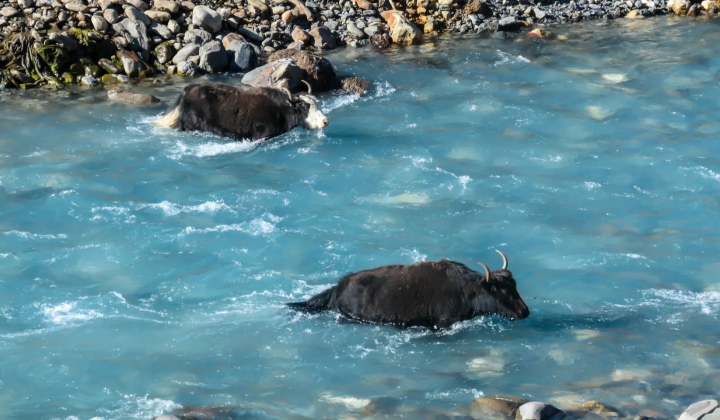
According to НВ — Техно: According to research released in the May issue of Science, the rate at which Himalayan rivers alter their paths has jumped by 33%, while the number of free-flowing bends has nearly doubled. This acceleration, driven by climate change, poses serious threats to infrastructure and the billions of people who rely on these waterways.
A team of scientists from Beijing and Sichuan analyzed satellite imagery and field measurements collected over the past four decades. Between 1980 and 2020, the speed of river channel migration increased by one-third, and the count of unconstrained meanders rose by almost 100%. The mountain range is warming nearly twice as fast as the rest of the planet, a factor that heavily influences river behavior.
Dr. Zhongpen Han notes that the upper reaches of the High Himalayas have become a testing ground where rising temperatures and river channel dynamics clash with maximum intensity.
This allows researchers to observe how meandering rivers undergo morphological changes. Professor Chenshan Wang warns that for the billions who depend on these waters, the quickening of river dynamics introduces new safety challenges. Flood risks are growing, riverside infrastructure faces greater danger, and predicting where a river will flow a decade from now has become nearly impossible.
Importance of River Monitoring
These findings underscore the need for ongoing monitoring of Himalayan rivers, as they serve as a stable lifeline for two billion people. In the face of global climate shifts, action is required to reduce the hazards linked to changing river channels.
Climate-driven alterations in Himalayan river courses demand an urgent response from governments and international bodies. Given that billions of people depend on these rivers for:
- water supply
- agriculture
- energy
it is critical to develop adaptation strategies that mitigate negative impacts. This research could serve as a foundation for further scientific studies and policy-making aimed at protecting both ecosystems and the populations reliant on these vital water arteries.

Read also