General Petraeus on the Global Economic Fallout of a Potential U.S.-Iran War

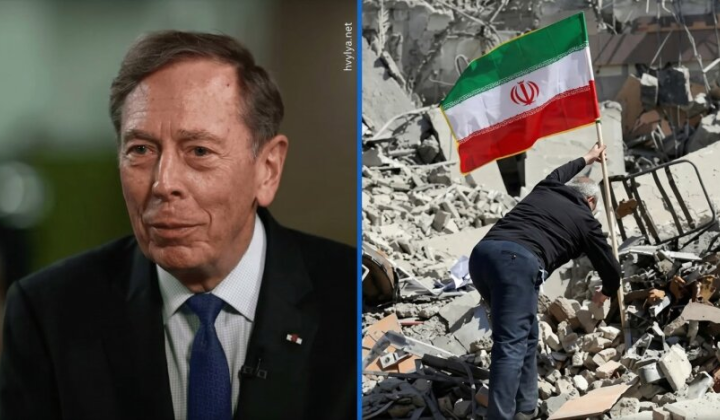
General David Petraeus Weighs In on a Potential Conflict with Iran
According to ХВИЛЯ: In an interview with Seth Jones, a senior vice president at CSIS, former CIA Director and U.S. Central Command chief General David Petraeus discussed a hypothetical American air campaign against Iran. He noted that military successes from a 12-day air war last summer included degrading a significant portion of Iran's air defense systems and reducing missile launches targeting Gulf states, Israel, and U.S. assets by roughly 90 percent. Over 40 Iranian vessels were also destroyed during that period.
Petraeus further highlighted serious challenges U.S. forces could face, including the drone threat. He stated:
'The most misguided action would be to shoot down a drone with an interceptor missile. An interceptor costs at least two million dollars... It's an entirely lopsided exchange against a drone priced at a maximum of thirty thousand dollars.' General David Petraeus
He also pointed to the high price of oil, which currently exceeds $100 per barrel, as a factor that could impact the global economy. This analysis comes amid ongoing regional tensions and concerns over energy security.
Iran's Domestic Landscape and the Wider Regional Picture
The internal situation in Iran is another cause for concern. According to Petraeus, the regime's security forces number:
- over 150,000 in the Islamic Revolutionary Guard Corps (IRGC),
- over 200,000 in the Basij militia,
- 400,000 in the regular army (Artesh),
- 250,000 in the national police,
- and 25,000 in the Ministry of Intelligence.
Mojtaba Khamenei, the son of the previous Supreme Leader, has been selected as Iran's new head of state. He has been on a U.S. sanctions list since 2019. The lack of an organized domestic opposition further complicates the political landscape.
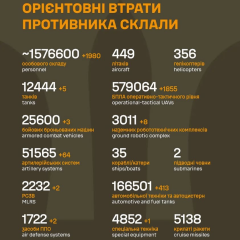
Discussing the regional context, Petraeus pointed to the activities of Hezbollah and the Houthis, as well as changes in Syria, where the Assad regime was toppled in December 2024. Ahmed al-Sharaa became Syria's new president in January 2025. The General also observed that Russia has suffered nearly 1.3 million casualties in Ukraine and endorsed sanctions against Moscow, remarking that they 'need to pass through Congress and go to the White House for signature, as this is the best available evidence of Russia's hostile activities against us.'
Additionally, Petraeus emphasized the importance of an upcoming U.S.-China summit scheduled for March 31 - April 2, 2026, stating, 'We must be absolutely certain this never escalates into actual conflict, because its consequences for the global economy would be catastrophic.' Thus, a military campaign in Iran could have profound global repercussions, given China's stance and the state of the world economy. His comments underscore the complex, multi-faceted military and political challenges the United States faces in the Middle East, where the high costs of aerial warfare and potential economic shocks may force Washington to reassess its strategic approaches.

Read also