Chemical Heart of Europe: Why Rotterdam Became a Point of Systemic Risk

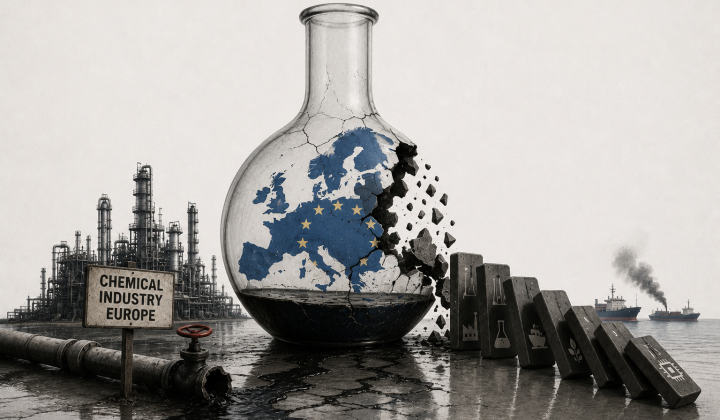
The European chemical industry is on the brink of systemic collapse, accelerating sharply against the backdrop of escalating tensions with Iran, writes Financial Times. The sector, already exhausted by high energy prices and the influx of cheap Chinese imports, is experiencing a snowball effect of plant closures (a sixfold increase in four years). In Rotterdam-one of the key clusters-plant closures threaten to collapse the entire integrated ecosystem. A symbolic blow was the Japanese corporation Mitsubishi's refusal to build a factory for strategic components MXDA (coatings for the defense industry and shipbuilding).
Here we see a classic example of the domino effect in the industrial economy. European chemistry is not just plastic bottles; it is a basic macroeconomic circulatory system: from fertilizers to components for the defense industry and microelectronics.
Integration Trap
The words of LyondellBasell's vice president about a 'torn heart' capture the essence of the problem. Chemical clusters (like in Rotterdam or Ludwigshafen) operate as a single organism: the waste of one plant is raw material for another. The loss of 1-2 links renders the entire production unprofitable. This is known as cascading deindustrialization.
Iranian Detonator
The war with Iran hits Europe twice. Firstly, it poses a physical threat to the logistics of energy resources through the Strait of Hormuz. Secondly, it leads to a surge in insurance premiums and hydrocarbon prices, which for Europe (deprived of Russian gas) is a matter of life and death.
Chinese-American Pinchers
Europe finds itself squeezed between the US (where energy is cheap due to shale gas and IRA subsidies) and China (which floods the market with cheap chemicals thanks to access to Russian raw materials). Mitsubishi's refusal is a signal: global capital no longer considers Europe a safe and profitable place for investment, even in strategic industries.
Conclusion: Industrial Loss of Subjectivity
Europe is rapidly losing its status as an industrial superpower, becoming a 'Benes on steroids'-a political player without an economic base. The degradation of the chemical sector is a direct blow to the European defense industry. You cannot ramp up the production of shells and missiles if your precursor and special coating plants are closing down (as in the case of MXDA).
In the context of a possible 'September term sheet' from Trump and Xi, this news means one thing: Europe sits down at the negotiating table (if they are even allowed) as a weakening patient. For Ukraine, this is a clear signal: counting on the European defense industry to fully replace American supplies in the foreseeable future is a dangerous illusion. Europe is currently fighting for its own industrial survival.

Read also