A $1.6 Billion Russian Oil Hub Emerges on an Indonesian Island

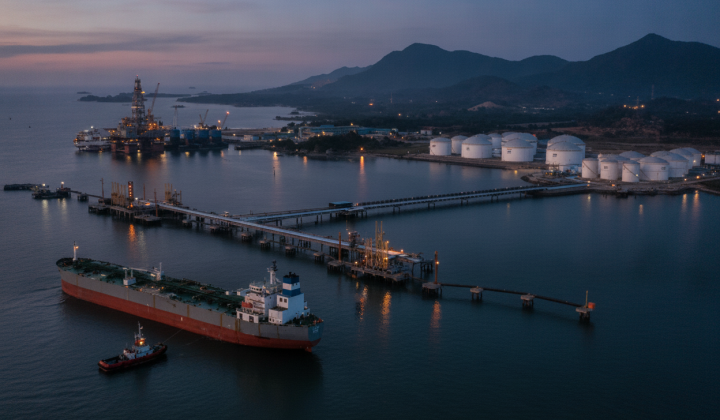
Indonesia's Great Karimun Island Becomes a Transshipment Hub for Russian Oil
According to Главком: Despite sanctions imposed by the UK and EU, Indonesia's Great Karimun Island has evolved into a major transshipment center for Russian oil. Between July 2024 and May 2025, the island's terminal received petroleum products worth a total of $1.6 billion, shipped from seven Russian ports-three of which are under EU sanctions. The terminal was purchased in mid-2024 by Novus Middle East DMCC, a company based in the United Arab Emirates with ties to the 2Rivers network of oil trading firms.
The facility includes 30 storage tanks, fuel blending units, and deepwater berths. Novus is linked to 2Rivers, which is controlled by two Azerbaijani businessmen accused of playing a key role in Russian oil trading since 2022. Sanctions documents note their connections to Rosneft. However, 2Rivers has stated that 'after its management buyout in 2024, it has no connection whatsoever to Novus Middle East DMCC.'
Oil Transshipment and Its Ripple Effects
The Malta-flagged tanker Solo departed from the port of Primorsk, traveling a distance of 17,000 kilometers to Karimun. The 18-year-old vessel offloaded part of its fuel in the Malacca Strait via ship-to-ship transfer. At the terminal, 238,548 barrels of gasoil were discharged, with the cargo recipient listed as Cromwell Alliance FZCO. More than 90% of the 5 million tons of petroleum products that passed through Karimun did so after Novus acquired the terminal.
From October to April, over 700,000 tons of fuel arrived at the terminal on Jurong Island. Of that, 40% was directed to Chevron's terminal in the Philippines, with additional shipments going to Australia and other countries. Oil was also received by floating storage units near Malaysia and buyers in Myanmar, which became a Karimun client after striking a deal with Russia in April 2025. Some of the oil used as feedstock for plastics ended up at a Chinese industrial facility.
Notably, the UK has been adding companies involved in supplying oil to Karimun to its sanctions lists since 2024, and in April 2025, the EU included the island in its sanctions package. However, Indonesia continues to enforce only those sanctions backed by the United Nations. On the night of July 11, Ukraine's Defense Forces struck over 20 Russian tankers in the Sea of Azov, reflecting active developments in the petroleum market tied to sanctions policies.
The establishment of Great Karimun as a hub for Russian oil transshipment highlights the challenges facing international sanctions and their effectiveness. Despite restrictions, Indonesia-which adheres solely to UN sanctions-demonstrates the ability to sustain trade with Russia by leveraging third countries. This could have significant implications for global oil traders and energy security, particularly amid rising tensions over oil and gas resources in the region.

Read also