Historian Warns of Semiconductor Crisis Driven by AI Arms Race

Growing Fears Over Taiwan’s Semiconductor Stability
According to ХВИЛЯ: In a report prepared for Stanford University’s Hoover Institution, British historian Niall Ferguson raised alarms about the potential fallout from a semiconductor crisis centered on Taiwan. He stressed that the unchecked competition in artificial intelligence between the United States and China could trigger severe consequences. Ferguson outlined two parallel races: one among American corporations, and another between the two global superpowers.
The Stakes of Controlling Artificial Intelligence
Ferguson’s report highlighted that the U.S. government has deliberately chosen not to regulate the AI sector. At the time of the report, President Donald Trump stated he would avoid any actions that might hinder America’s lead in this field:
“I didn’t like certain aspects of it. I think it gets in the way-we’re ahead of China.” - Donald Trump
U.S. Treasury Secretary Scott Bessent also underscored the critical need to dominate AI, remarking:
“If we don’t win in AI, the game is over.” - Scott Bessent
He further warned of potential dangers, noting that 'someone could create something 10 times worse than Covid, simply by using biological data.'
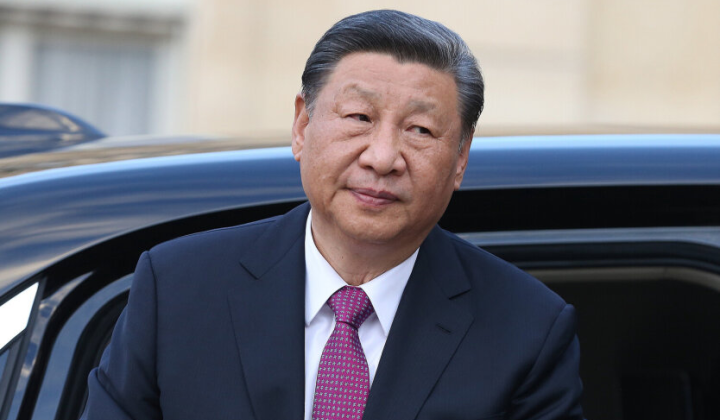
Ferguson believes that the Mythos model, developed by the company Anthropic, has given the United States an edge that rivals could close within 6 to 18 months. This, he argues, is pushing Beijing toward preemptive measures-specifically, Xi Jinping may attempt to seize control of the Taiwan Strait and TSMC. The report draws an analogy to horses, where the invention of the engine led to a population collapse of over 90 percent, illustrating how power balances can shift dramatically.
Ferguson points to a recurrence of the logic seen in the 1970s, when the world moved from strategic balancing to détente. In this context, he emphasized the need for an agreement to control AI weaponry, a recommendation previously made by Henry Kissinger. Noting that since 2024, U.S. interest payments on debt have surpassed defense spending, Ferguson calls for de-escalation and cooperation in this vital field to avert potential crises.
Ferguson’s concerns about a semiconductor crisis in Taiwan reflect broader geopolitical and economic challenges facing the United States and China. Both nations are locked in fierce technological competition, especially in AI development, which could have far-reaching implications for global security and economic stability. As control over critical technologies becomes a key lever of influence, further escalation of this rivalry may lead to serious crises requiring international collaboration to resolve.
As the geopolitical landscape shifts, Ferguson draws intriguing comparisons between the current tensions in Taiwan and historical conflicts, suggesting that the AI arms race could mirror the dynamics of past cold wars. Understanding these parallels may shed light on the potential consequences of technological competition on global stability.

Read also