Historian likens AI arms race to mafia wars and nuclear peril

Assessing the trajectory of artificial intelligence
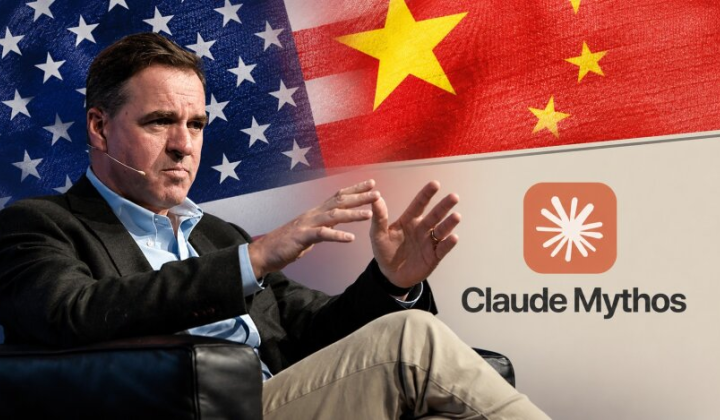
According to ХВИЛЯ: In a working paper released on June 2, 2026, by the Hoover Institution, historian Niall Ferguson examines the unbridled competition in artificial intelligence (AI) among U.S. companies and between the United States and China. He draws comparisons to organized crime conflicts and the nuclear threat, arguing that AI is making weapons far more lethal. Ferguson warns that the greatest danger is geopolitical: the longer China trails in technological development, the stronger the temptation for a preemptive strike against Taiwan. He therefore calls for a new era of détente and AI arms control modeled after nuclear agreements.
Ferguson, a senior fellow at the Hoover Institution and chair of the Working Group on Applied History, stresses the importance of maintaining a 12-to-24-month lead in advanced AI capabilities. According to a forecast by Anthropic, by 2028 the United States will possess roughly 11 times the computing power of China’s AI sector. However, China lacks access to ASML’s EUV machines, which restricts its ability to advance its technology.
Growing concerns and regulatory efforts
Meanwhile, anxiety over rapid AI development is mounting in the United States. A poll indicates that 60% of Trump voters are troubled by this trend, and nearly 80% believe stronger regulation is needed. Two-thirds of Americans overall also express concern and support new regulations. The White House, for its part, emphasizes that states should not be allowed to regulate AI development, as the issue crosses state lines and carries critical implications for foreign policy and national security.
Against this backdrop, a National Framework Document on AI Legislation was published on March 20, 2026, offering recommendations to Congress. These include:
- streamlining federal permitting processes for building and operating AI infrastructure;
- establishing commercially reasonable age-verification requirements for AI platforms.
“AI is changing how the U.S. military makes decisions in war.” - Niall Ferguson
Artificial intelligence is not only reshaping military strategy but also affecting employment. Among 22-to-25-year-olds, employment in AI-vulnerable occupations has dropped by 6% in the three years since ChatGPT’s debut. Citrini Research projects that unemployment could rise to 10.2% by June 2028 due to AI’s impact on the labor market. Ferguson believes this technology could become a major factor in global conflicts and urges appropriate measures to avert potential disasters.
The current state of AI development underscores the need for international cooperation to prevent conflicts stemming from technological disparities between nations. Tightening controls over technologies with military applications has become a key issue for global security. At the same time, urgent questions around labor market regulation and the social consequences of AI adoption remain critical for governments, which must strike a balance between innovation and protecting their citizens.
As the competition in artificial intelligence intensifies, the implications extend beyond geopolitical tensions. A recent analysis highlights how the ongoing AI arms race may lead to a semiconductor shortage, a crucial factor in technological advancement. To understand the broader challenges posed by this race, including potential crises in critical industries, explore more in our detailed report on the semiconductor crisis driven by AI.

Read also