Israel Shares Intelligence with U.S. on Alleged Iranian Plot to Assassinate Trump

Threat from Iran
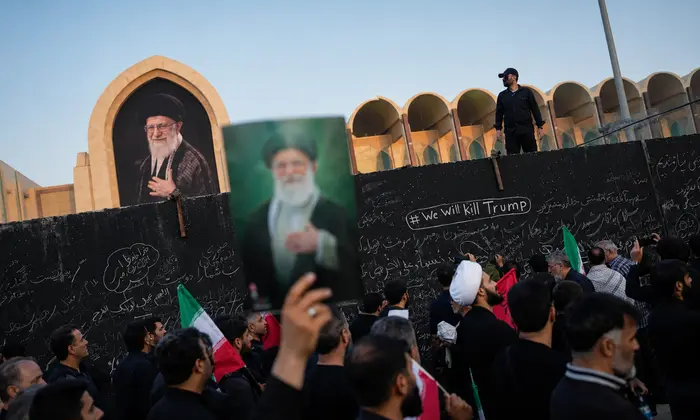
According to Главком: Israel has provided the United States with intelligence suggesting that Iran may be planning to assassinate former President Donald Trump. According to a report published by The Wall Street Journal, Tehran has publicly vowed revenge against Trump for the 2020 killing of General Qasem Soleimani. These threats have intensified following the funeral ceremonies for Iran's Supreme Leader Ali Khamenei, where attendees chanted slogans calling for Trump's death. At one event, a banner was displayed reading, 'We will kill Trump.'
In response to these threats, Trump altered his route home, declining a new $400 million aircraft gifted by Qatar and instead using an older Air Force One plane. During the flight, the crew completely disabled the aircraft's transponder, a move indicating heightened caution. Commenting on the situation, Trump remarked:
'I’m on every one of their lists. I saw it this morning-I’m on every single one of their lists. So far, I think I’ve been a bit lucky, but that might not last long.' Donald Trump
Rising Tensions
Ali Khamenei was killed on July 10, 2026, in a joint U.S.-Israeli airstrike on Tehran. On March 8, his son Mojtaba Khamenei, who sustained facial and leg injuries during the airstrike, was chosen as Iran's new Supreme Leader. Iran held funeral ceremonies for Ali Khamenei from July 3 to July 9 in Tehran and Iraq.
In November 2024, the U.S. Department of Justice charged an Iranian citizen with plotting to assassinate Trump. Additionally, in 2024, Trump survived a shooting attempt in which a bullet grazed his ear. These events underscore the growing tensions between Washington and Tehran, as well as the uncertainty surrounding international relations amid the Iranian threat.
The threat from Iran is part of a broader context of strained relations between Tehran and Washington, which have remained tense since the killing of Soleimani. A sharp escalation could have serious consequences not only for the U.S. and Iran but also for stability in the Middle East region. Current developments highlight the need for close monitoring of the situation and diplomatic efforts to prevent further conflict.

Read also