Beijing Prepares Fresh Export Curbs on AI Technology

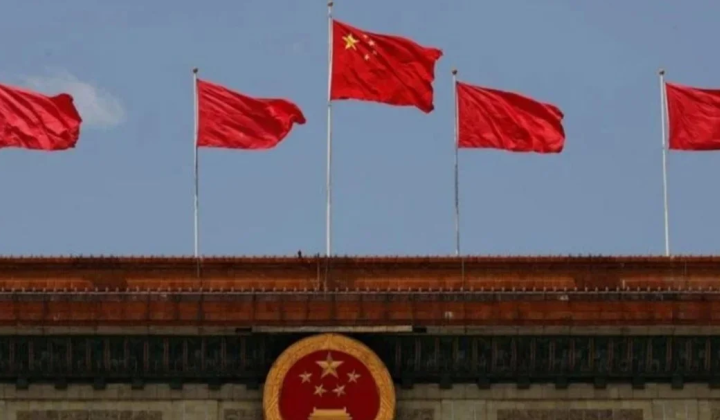
China Tightens Rules on Domestic AI Systems
According to НВ — Техно: China is moving to impose new restrictions on the use of its most advanced artificial intelligence systems abroad. Government officials have already held meetings with major tech firms, including Alibaba, ByteDance, and Z.ai. The proposed measures could apply to both open-source and proprietary AI models. Authorities are also weighing controls over which companies are allowed to fund Chinese AI startups.
Shift Toward Homegrown Hardware
As part of a broader strategy, Chinese developers are transitioning away from Nvidia chips in favor of locally manufactured alternatives. This shift aligns with a state-backed initiative that plans to invest roughly 2 trillion yuan (nearly $294 billion) in data center infrastructure over the next five years. Z.ai's recently released GLM-5.2 model achieved results in cybersecurity benchmarks that rival top American systems.
Meanwhile, OpenAI and Anthropic have noted that some Chinese companies may have used U.S. models to build their own systems, even though such practices are not explicitly illegal. The administration of U.S. President Donald Trump has signaled its intent to tighten oversight in this area, while Beijing has expressed concern over Anthropic's new Mythos model.
Zhou Hongyi, founder of Chinese firm 360 Security Technology, stated: 'China cannot allow the U.S. to gain an edge in cybersecurity through such technologies.'
As a result, both the United States and China are increasingly isolating their AI ecosystems, a trend that could reshape global tech relations. These new restrictions may slow cross-border technology and innovation exchange, ultimately affecting national competitiveness in AI. The surge in investment in domestic products also underscores China's push to achieve self-sufficiency in this strategically vital sector.
In addition to these export curbs, China's commitment to advancing its technological capabilities is evident in its recent initiatives, such as the establishment of a significant quantum hub in Shanghai. This investment not only reflects the nation's strategy to bolster its domestic tech landscape but also highlights the broader implications for global tech competition. To learn more about China's ambitious plans in next-generation technologies, see our detailed report on the quantum technology hub.

Read also