China Moves to Bypass Russia with a New Trade Corridor


Beijing's Strategy for the Trans-Caspian International Transport Route
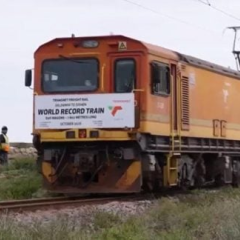
According to ХВИЛЯ: China is preparing to significantly increase cargo shipments with Europe via the Trans-Caspian International Transport Route (TITR), deliberately avoiding Russian territory. This information comes from Ukraine's Foreign Intelligence Service. Also referred to as the Middle Corridor, this pathway stretches over 4,250 kilometers, crossing Kazakhstan, the Caspian Sea, Azerbaijan, Georgia, and Turkey. The longest segment of the route runs through Kazakhstan.
Kazakhstan Railways (KTZ) plans to invest around $10 billion in infrastructure upgrades by 2030. In 2026, Kazakhstan intends to build 900 kilometers of new tracks, with roughly 300 kilometers on the Ayagoz–Bakhty section, establishing a third railway crossing at the border with China. The corridor's annual capacity is expected to rise from 55 million to 100 million tons by 2030.
- KTZ also plans to allocate over $100 million for six new cargo vessels serving routes between the ports of Aktau, Kuryk, and Baku.
- In 2026, the company is preparing for an initial public offering (IPO), with potential listings in London, Hong Kong, and Kazakhstan.
- Freight volumes on the corridor reached 2.76 million tons in 2023, 4.48 million tons in 2024, and 4.12 million tons in 2025.
- During the first quarter of 2026, roughly 173 trains-each carrying 55 containers-traveled the route, with KTZ targeting 600 trains annually.
- By 2027, this figure could increase by an additional 67%.
Why the TITR Is Expanding and Its Impact on Global Trade
The main drivers behind this project include Russia's toxicity, sanctions vulnerability, and unreliability, as well as a desire to move away from unstable maritime routes. The TITR integrates rail transport, port infrastructure, ferry crossings, and customs procedures across multiple countries. Funds from the IPO will go toward upgrading rolling stock and developing new routes. Analysts estimate that once the TITR is fully operational, Russia will lose its status as a key transit hub between Asia and Europe.
The development of the Trans-Caspian International Transport Route reflects China and Kazakhstan's push to reduce dependence on Russian transit, a goal that has gained urgency amid shifting geopolitical dynamics.
Infrastructure investments could significantly boost the corridor's competitiveness, potentially reshaping global logistics chains and trade relations between Europe and Asia. This shift may also alter international trade balances, particularly by diminishing Russia's role as a transit gateway.
As China seeks to enhance its trade routes, the emergence of new infrastructure projects is pivotal. Notably, the recent announcement of a new railway initiative between Russia and China highlights the competition in freight transport. This development underscores the shifting dynamics in global trade, as nations adapt to changing geopolitical landscapes and look for more reliable shipping alternatives.

Read also