What's Holding Ukraine Back from Stronger Ties with Central Asia?


Examining Ukraine's Cooperation with Central Asia
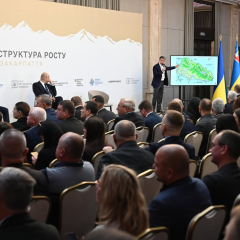
According to ХВИЛЯ: A series of five expert studies on Ukraine's collaboration with Central Asian nations was conducted in February-March 2026 as part of the 'Europe and Central Asia: Dialogue Without Borders' project. The research involved 83 experts from diverse fields including business, think tanks, academia, and expert communities. The experts' primary conclusion identified logistical challenges as the dominant constraint on developing cooperation, alongside the pragmatic economic priorities held by the countries in the region. This region is increasingly important for global trade and security, making Ukraine's engagement a strategic consideration.
The 'Europe and Central Asia: Dialogue Without Borders' project was implemented by the charitable organization 'International Charitable Foundation of Public Diplomacy' in partnership with the public organization 'Center for Geopolitical Research KONSTANTA R&D Group'. Financial and organizational support was provided by the International Renaissance Foundation. The studies covered the Republic of Kazakhstan, the Republic of Uzbekistan, the Kyrgyz Republic, the Republic of Tajikistan, and Turkmenistan.
Identified Challenges and Promising Areas for Cooperation
The research highlighted significant logistical obstacles, including:
- High transportation costs
- Poor diversification of routes
- Dependence on transit states
- Limited capacity on certain routes
- Complexities of multimodal logistics
- Uneven tariff structures
- Unreliable delivery times
- Bureaucratic customs procedures
- Insufficient digitalization of cargo tracking
Experts also pinpointed promising sectors for collaboration between Ukraine and Central Asia, such as:
- Industry and mechanical engineering
- Transport and logistics
- Agribusiness
- Digital technologies
- Specific segments of financial services
Opportunities in infrastructure, energy, and pharmaceuticals are also being considered in certain countries. It is important to note that Central Asia is already an area of active economic presence for nations like China, Turkey, Russia, and the European Union.
Models for engagement with regional countries varied: Kazakhstan functions as a transit and resource hub, Uzbekistan is viewed as a large market and a platform for scaling operations, Turkmenistan is an infrastructure and resource partner, Tajikistan could be a destination for applied solutions in basic sectors, and the Kyrgyz Republic offers a more flexible space for adaptive forms of cooperation.
Consequently, the study's findings underscore the critical importance of logistical factors and a pragmatic approach to economic collaboration between Ukraine and Central Asian states, which could foster mutually beneficial regional relations. Given the established economic influence of other powers in Central Asia, Ukraine must develop effective strategies to enhance cooperation by addressing the identified challenges and leveraging the potential in this part of the world.

Read also