Complex Organic Compounds Detected on Mars by NASA Rover

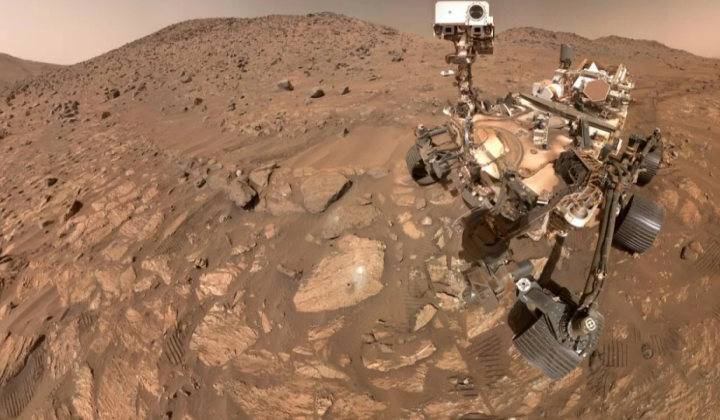
Organic Matter Discovery on the Red Planet
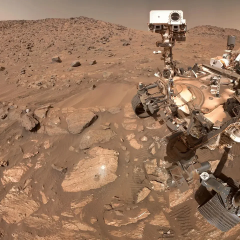
According to НВ — Техно: NASA's Perseverance rover has identified complex organic compounds, including macromolecular carbon, within rocks at Jezero Crater on Mars. While this finding does not directly confirm the existence of life, it points to conditions that may have been suitable for life billions of years ago.
Since its arrival in 2021, Perseverance has been exploring Jezero Crater, believed to have once hosted a lake and river delta around 3.7 billion years ago. The carbon-based compounds were analyzed using the rover's SHERLOC instrument. Macromolecular carbon was detected in two rock samples, notably in the Cheyava Falls mudstone. Importantly, the distance between Perseverance's findings and those of the Curiosity rover in Gale Crater exceeds 3,500 kilometers.
Researchers note that the MMC is more complex than earlier organic molecules found on Mars, such as alkanes in the Cumberland mudstone. Raman mapping was employed to compare the spectral traits of the sample with both meteoritic and terrestrial specimens. Based on the G-band Raman parameters, the macromolecular carbon was identified as amorphous carbon, with its peak position and G-band bandwidth resembling those from both biotic and abiotic sources.
Scientific Implications of the Discovery
Kyle Uckert, an astrobiologist and scientist at NASA's Jet Propulsion Laboratory, stated: 'The detection of macromolecular carbon on a dust-cleared but unprepared rock surface at Cheyava Falls represents the shallowest detection of organic material on the Martian surface.'
Ashley Murphy, a geologist at the Planetary Science Institute in the United States, remarked: 'Using the G-band Raman parameters of the MMC, we determined it is amorphous carbon. The presence of organic matter on Mars does not necessarily imply biological processes.'
Additionally, Perseverance has traveled 42 kilometers and 195 meters since landing five years ago, reaching a marathon milestone on June 14. It is only the second rover to cover a marathon distance on another world, following Opportunity in 2015.
The detection of macromolecular carbon on Mars carries significant scientific weight, as it could aid in understanding the planet's past chemical processes. Although it is not direct evidence of life, these research results may advance the study of conditions under which life could have emerged. As Perseverance continues its mission, future discoveries may shed further light on Mars' geological and biological history.
In addition to the recent discovery of complex organic compounds, NASA's Perseverance rover has also achieved a significant milestone by covering a marathon distance on the Martian surface. This accomplishment reflects the rover's durability and its ongoing mission to explore the Red Planet's geological history. For more insights into this remarkable journey and its implications for future exploration, see how the rover's marathon efforts complement its scientific findings on organic matter here.

Read also