Sahara Meteorite Reveals Evidence of a Lost Moon-Sized Protoplanet

Study of Meteorite NWA 12774
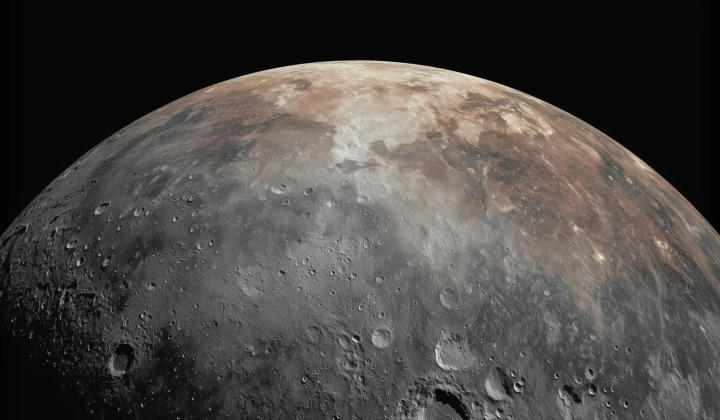
According to НВ — Техно: A meteorite discovered in the Sahara Desert, designated Northwest Africa (NWA) 12774, has provided scientists with the first direct proof of a long-lost planetary embryo roughly the size of the Moon, which was destroyed in a catastrophic collision. The groundbreaking findings are detailed in the journal Earth and Planetary Science Letters. This discovery sheds new light on the violent early history of our solar system, where such protoplanets were common but rarely leave traces.
NWA 12774 belongs to a rare class of meteorites known as angrites-some of the oldest volcanic rocks in the solar system, formed just a few million years after its birth. Out of over 80,000 known meteorites on Earth, only 68 are angrites. Their chemical makeup has long puzzled researchers, as they contain very little silica (silicon dioxide), a key component of Earth and Mars.
Unique Features of the Meteorite
Inside NWA 12774, scientists detected a mineral called clinopyroxene with an unusually high aluminum content. Forming this mineral requires a pressure of at least 17.5 kilobars-far greater than the roughly 1 kilobar found at the bottom of the Mariana Trench. This pressure indicates that the parent body from which the meteorite originated must have had a radius exceeding 1,800 kilometers. For comparison, the Moon's radius is about 3,300 kilometers.
Previously, researchers believed angrite meteorites came from small asteroids with radii under 200 kilometers. However, the preservation of delicate chemical signatures and sharp crystal edges near the surface suggests a different formation process. Scientists now propose that this celestial body followed its own independent evolutionary path, and after the catastrophic impact, its fragments may have been incorporated into other rocky planets, including Earth.
In essence, NWA 12774 could be the last remaining piece of a lost world the size of the Moon, opening new avenues for understanding planetary evolution in our solar system.
The implications of this meteorite discovery are significant for both astronomy and geology, as it has the potential to reshape our understanding of how planets form and evolve. Studying such meteorites helps scientists reconstruct the solar system's history and determine how different planetary bodies may have interacted in the past. This finding may also confirm or challenge existing theories about the origins of Earth and other rocky planets.
This discovery not only highlights the unique characteristics of NWA 12774 but also connects to broader research on early celestial bodies. For further insights into how fragments of meteorites can reveal the dimensions of ancient protoplanets, explore our article on a related find in the Sahara, which uncovers the scale of a previously unknown planetary entity here.

Read also