Mikhalkov Fabricates a Heroic Tale About Putin’s Grandfather and Speaks Out Against Ukrainian Language in Donbas Schools

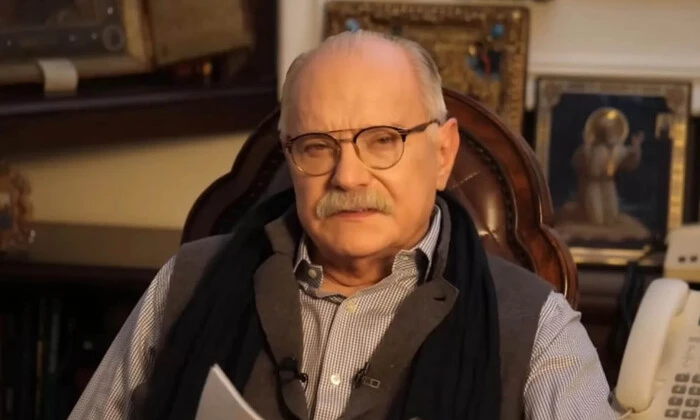
Public Reaction to the Alleged Exploit of Putin’s Grandfather
According to Главком: Nikita Mikhalkov, a Russian filmmaker and a known supporter of Vladimir Putin, has shared a fabricated story about the wartime heroism of the president’s grandfather, Spiridon Ivanovich Putin, during World War I. According to Mikhalkov, Spiridon-born in 1879 in the village of Pominovo, Tver Governorate-fought on the Austrian front. He claimed that Spiridon managed to fire first when an Austrian soldier aimed at him, wounding his opponent. Mikhalkov further described how Spiridon, while in a trench, waited until nightfall to bandage the wounded Austrian’s injury before returning to avoid potential punishment for 'betrayal.'
Against this backdrop, the Uralvagonzavod corporation announced it would rename the Terminator infantry fighting vehicle to Spiridon. This decision has also sparked public debate.
Mikhalkov’s Statements on the Ukrainian Language
Regarding language policy, Mikhalkov told a gathering of teachers in the Moscow region that Ukrainian should not be taught in Donbas schools. He asserted that
“the Ukrainian language has become an embodiment of Russophobia”
and called this a 'catastrophe.' These remarks have drawn sharp criticism from educators and linguists, who view language as a vital component of cultural identity and heritage.
Mikhalkov’s claims about Putin’s grandfather, the renaming of the BMPT Terminator, and his opposition to Ukrainian-language instruction in Donbas have generated significant controversy in both public discourse and the media.
These events highlight a range of political and cultural challenges facing modern Russia, particularly concerning historical narratives, identity, and language policy. As a prominent cultural figure, Mikhalkov’s statements fuel ongoing debates over how historical accounts shape contemporary politics and public sentiment-debates that could have lasting implications for Russian-Ukrainian relations.
As discussions around Mikhalkov's controversial statements intensify, it's essential to consider the broader implications of the ongoing conflict in Ukraine. An expert recently analyzed why Putin's military actions are deemed a failure, shedding light on the challenges faced by Russia in its attempts to reshape narratives and assert control over neighboring nations. This context adds depth to the current debate on identity and language policy in the region.

Read also