3D-Printed Military Boat Unveiled by Hawaii-Based Company

A New Way to Build Military Boats
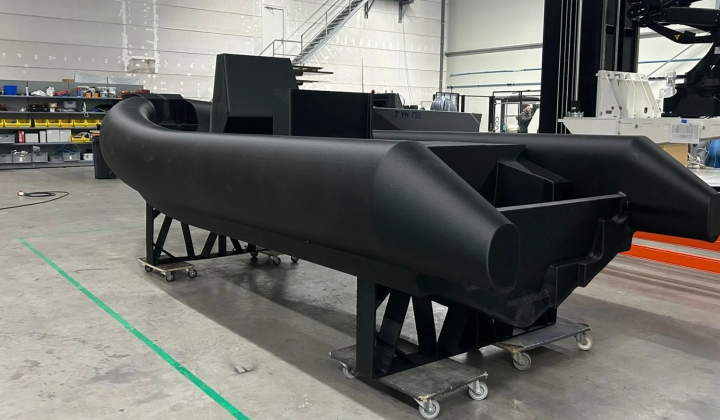
According to НВ — Техно: Voltage Vessels, a company based in Hawaii, has introduced an innovative method for producing military watercraft. Their latest creation is a six-meter rigid-hull inflatable boat (RHIB) made using a 3D printer. The project relies on additive manufacturing technology and a new material called Eclipse X9, which is crafted from specially recycled PETG thermoplastic reinforced with crushed basalt fiber. Basalt, a volcanic material, is plentiful in Hawaii.
Performance and Key Features
The RHIB boat was printed using the CEAD large-format industrial printing system. Tests conducted by the University of Maine’s Advanced Structures and Composites Center showed that the material’s tensile strength reaches about 108 megapascals-more than double the 49 megapascals of the benchmark composite HDPro. After spending over two years in saltwater, the material retained more than 90% of its strength, and its water absorption rate stayed below 0.4%. The low electrical conductivity of basalt fiber adds further benefits for this application.
Voltage Vessels plans to scale up production to roughly 15,000 tons of material per year and set up new manufacturing hubs in the Indo-Pacific region. Printing hulls on-site could cut the time needed to replace damaged vessels from weeks to just days-a critical advantage for naval operations in that area. RHIB boats are widely used for:
- transporting personnel
- patrolling
- intercepting vessels
- conducting special operations
Company representatives note that 'distributed composite manufacturing' opens up new possibilities for the military, particularly in terms of rapidly responding to needs for new boats or replacement parts.
In summary, Voltage Vessels is offering a groundbreaking approach to building military boats by combining modern technology with locally available materials, which could significantly reshape logistics in the Indo-Pacific region.
The adoption of new technologies like additive manufacturing in military boat production could have a major impact on naval operational capabilities. Faster production and reduced turnaround times for replacing damaged vessels can greatly improve response efficiency in strategically important areas. This approach may also lower logistics and maintenance costs, which is critical for military operations.

Read also