Cutting the $36k Cost of Hiring Managers: How an Application Form Saves Time and Money

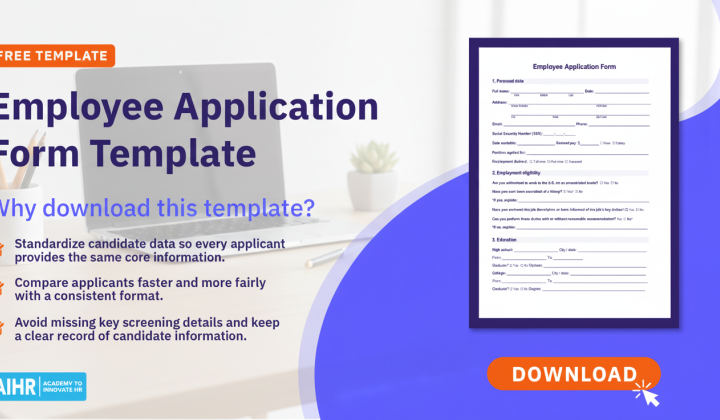
The Job Application Form
According to AIHR: A job application form is a crucial hiring tool that organizes candidate information and streamlines evaluation. This article details various form types, their structure, and best practices for development, while also providing a free template useful for both employers and job seekers.
Hiring for managerial roles carries an average cost of $35,879. The recruitment process can take up to 57 days, and in some cases, extend to 90 days. It's important to note that when hiring cycles exceed 40 days, candidate dropout rates increase by 12%. This underscores the necessity of effectively utilizing job application forms to optimize the hiring process. In today's competitive market, streamlining recruitment is essential for controlling costs and securing top talent before they accept other offers.
Form Elements and Types
A standard job application form includes a variety of elements, such as:
- Personal details
- Position specifics
- Work eligibility
- Employment history
- Education
- Skills
- Availability
- Compensation expectations
- References
- Candidate statement
It is also important to include a signature and date.
There are several types of job application forms: standard, basic, role-specific, and printable. Each format can be adapted to the needs of the employer or candidate. Employers use these forms to compare applicants, assess suitability, and maintain records on strengths and career progression. Candidates often submit an application form alongside their resume, which helps create a more comprehensive picture of their experience and qualifications.
Developing an effective job application form involves six best practices that ensure efficiency and ease of use. Structured data collection allows employers to receive consistent information from all candidates. Thus, the job application form is a vital component of the hiring process that can significantly impact the success of finding qualified employees.
Increasing labor market competition and rising recruitment costs make the efficiency of application forms especially critical for companies. Given how hiring delays can affect candidate dropouts, it is important for organizations to optimize their processes to shorten hiring timelines and improve selection quality. This can help not only attract talented workers but also reduce hiring expenses, which is critical for successful business operations.
As companies increasingly adopt innovative strategies to enhance their hiring processes, understanding the impact of technology is vital. For instance, exploring how emerging AI trends will transform talent acquisition by 2026 can provide valuable insights into future recruitment dynamics and further streamline efforts to attract top candidates.

Read also