NASA Upgrades Quantum Lab on the ISS to Drive Scientific Breakthroughs

The Cold Atom Lab: A Quantum Facility Aboard the ISS
According to НВ — Техно: NASA’s Cold Atom Lab, a quantum research facility on the International Space Station (ISS), continues to push the boundaries of science by studying Bose-Einstein condensates in microgravity. On April 11, an upgraded version of the science module arrived at the station, marking the fourth major update to the lab since it was installed aboard the ISS in 2018. This facility supports five international research teams that investigate novel properties of matter at extremely low temperatures.
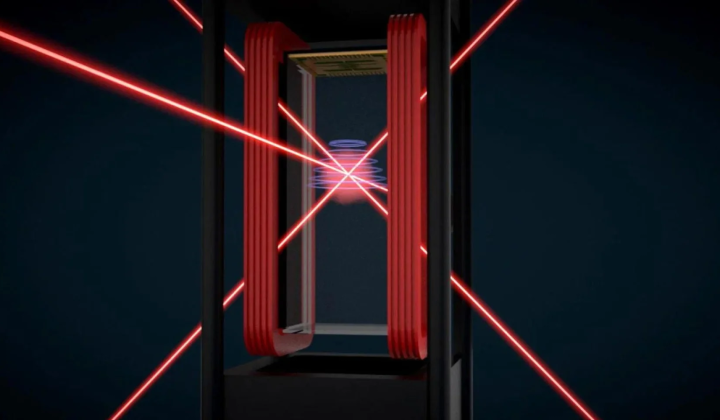
Roughly the size of a mini-fridge, the Cold Atom Lab is operated remotely from Earth. It cools atoms to temperatures below minus 237 degrees Celsius, enabling researchers to explore Bose-Einstein condensates-the fifth state of matter. Each experiment begins by heating a strip of rubidium or potassium to 400 degrees Celsius, after which the atoms are cooled to the required conditions.
Key Upgrades to the Lab
Among the most significant changes in the upgraded lab are a redesigned magnetic trap and reengineered metal strips. "At the coldest temperatures, matter behaves completely differently from anything we've encountered before," said Jason Williams, the project scientist for the Cold Atom Lab.
Ethan Elliott, the deputy project scientist, emphasized that the Cold Atom Lab is the first facility to create Bose-Einstein condensates in orbit:
“We are demonstrating that we can make quantum technologies work reliably in space.” - Ethan Elliott
He added: "The last century saw a quantum revolution that gave us lasers, mobile phones, and MRI for medical imaging. Now we are conducting the quantum revolution 2.0-directly manipulating large quantum states-and we hope for similar progress in quantum technologies through the development of this science in orbit."
The research conducted in the Cold Atom Lab could significantly impact the future of quantum technologies, opening new horizons in understanding physical phenomena at the atomic and molecular level.
Operating the Cold Atom Lab on the ISS represents a critical step in advancing quantum technologies, which could unlock new possibilities across various fields, including information technology, medicine, and materials science. Research in microgravity allows scientists to study properties of matter that cannot be achieved on Earth, potentially leading to new scientific discoveries and technological innovations.
The recent enhancements to NASA's Cold Atom Lab mark a significant step in quantum research aboard the ISS. For those interested in a comprehensive overview of these advancements, you can explore more about the upgrades made to the facility and their implications for future scientific endeavors.

Read also