Ukraine War Drives NATO to Rethink Its Air Defense Strategy

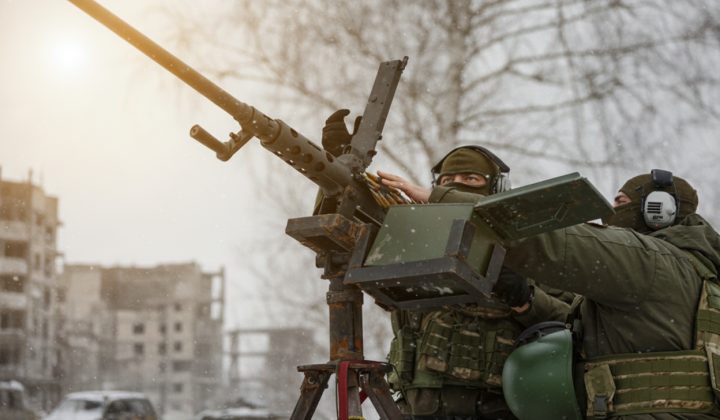
NATO Adapts to Evolving Threats
According to Главком: Russia’s full-scale invasion of Ukraine has prompted NATO member states to reassess their approach to air defense systems. Allied forces are closely analyzing Ukraine’s experience in countering drones, which has proven the effectiveness of low-cost technologies. The conflict in Ukraine has revealed that Western militaries-long focused on detecting aircraft, cruise missiles, and ballistic missiles-now face new challenges from swarms of cheap, low-flying unmanned aerial vehicles.
Embracing New Technologies
To address these emerging threats, Ukraine has deployed a network of acoustic sensors combined with radar systems, enabling drone detection by identifying the unique sound of their engines. U.S. Lieutenant General Sean Gainey has previously urged the integration of similar solutions into America’s air defense framework, highlighting the need to adopt innovative technologies.
Experts like Modris Kairišs note that 'Western nations do not need to invent new solutions from scratch,' as many essential technologies already exist. The primary challenge remains the rapid deployment and integration of these systems into a unified surveillance network.
Additionally, Ukrainian intelligence estimates that by 2026, Russia will face a shortage of interceptor missiles for its S-300 and S-400 systems. Currently, Moscow is using S-300 missiles for ground strikes, further underscoring the importance of investing in new sensor types to effectively counter such threats. As John Stringer points out,
'to effectively combat these threats, the West must invest more aggressively in new types of sensors.'
Consequently, Ukraine’s experience in drone warfare has captured the attention of allied nations, and NATO is actively working to adapt its strategies to modern air defense challenges. The critical role of diverse sensors in detecting drones is also emphasized by experts. As Modris Kairišs observes,
'successful drone detection requires a wide array of different sensors, as each type of equipment has its own strengths and weaknesses.'
This highlights the need for a comprehensive approach to address the new threats facing NATO countries.
NATO’s shifting stance on air defense systems, informed by Ukraine’s battlefield lessons, reflects Western nations’ adaptation to contemporary challenges posed by drone technology. The implementation of advanced sensor systems and their integration into a cohesive surveillance network could significantly enhance protection against emerging threats. Leveraging Ukraine’s successful use of affordable technologies to counter drones represents a crucial step in strengthening NATO’s defensive capabilities for the future.
As NATO reassesses its air defense strategies in response to evolving threats, the role of drones in modern warfare has become increasingly significant. This shift is echoed by insights from former intelligence leaders, who highlight how unmanned systems have transformed combat dynamics. For a deeper understanding of this paradigm shift and its implications for future conflicts, explore the analysis on how drones are reshaping military strategies.

Read also