Scientists Achieve 50-Fold Speed Boost in Computer Simulations for XFEL Experiments

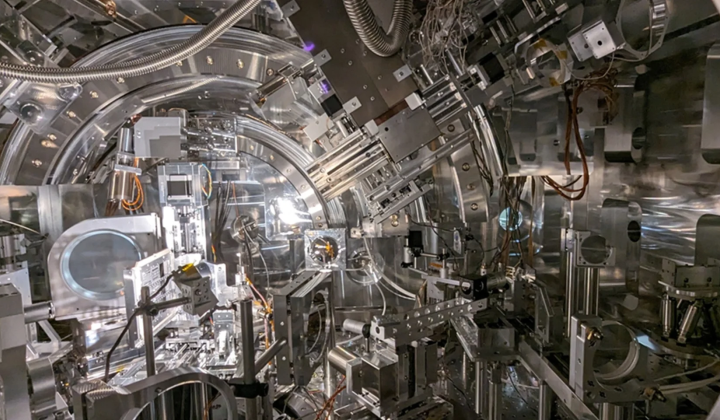
Breakthrough Simulation Technique Developed at HZDR
According to НВ — Техно: Researchers at the HZDR Institute of Radiation Physics have introduced a novel method that accelerates computer simulations for analyzing X-ray scattering experiments at the European XFEL by a factor of 50. This approach, grounded in a mathematical transformation into imaginary time, promises to significantly enhance the precision of data analysis. The innovation is expected to advance research in nuclear fusion energy and laboratory astrophysics.
Located near Hamburg, the European XFEL serves as a key facility for X-ray experiments. Dr. Tobias Dornheim, head of the High Energy Density Physics department at the institute, emphasizes the stakes:
“If we want to build a fusion power plant, we need to understand what actually happens in such extreme states of matter.”
He further noted that the new method now enables comprehensive and accurate analysis of datasets obtained from such tests. Developed by the HZDR team, this technique could become a standard tool for interpreting modern X-ray experiments.
Team member Moldabekov remarked on the breakthrough:
“In our tests, the simulations ran 50 times faster,”
unlocking new research possibilities. “In the future, it could play a central role in studying extreme states of matter,” he added.
Implications for Research
The method will also be crucial within the HIBEF consortium, which focuses on high energy density studies. Researchers simulate systems with various parameters to identify which combination matches experimental observations. Tobias Dornheim pointed out:
- “And we simply don’t have unlimited resources for this,”
highlighting the need for efficient analysis techniques. Thus, the new approach developed at HZDR promises to substantially improve research outcomes in fields related to extreme states of matter.
This advancement in computer simulation methodology has the potential to reshape research approaches in complex physical systems, particularly in fusion energy and astrophysics. By speeding up simulations, scientists can obtain results and make decisions faster, potentially accelerating progress in these critical scientific domains.
In the context of global efforts to develop sustainable energy sources, such innovations could have far-reaching implications for the energy sector and technological progress as a whole.
This advancement in simulation techniques not only enhances our understanding of extreme states of matter but also raises intriguing questions about the fundamental principles governing the universe. Recent findings from the Large Hadron Collider suggest that our current laws of physics may be challenged, further emphasizing the importance of innovative research methods like those developed at HZDR.

Read also