Solar Panel Achieves 31% Efficiency Without Using Indium, Researchers Announce

A Major Leap Forward in Solar Technology
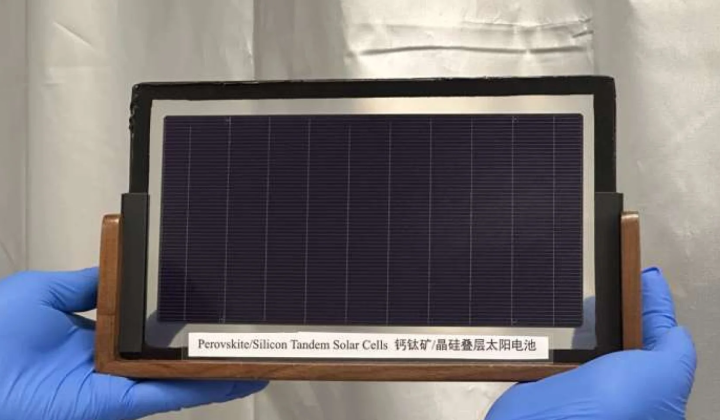
According to НВ — Техно: An international research team has created the first commercial-sized, high-efficiency tandem solar cell that eliminates the need for indium, replacing it with tin oxide-a material costing just 1% of indium's price. The cell reached a certified efficiency of 31% in a mini-module measuring 207.9 square centimeters and successfully operated outdoors for over three months. This breakthrough addresses a key challenge in renewable energy: reducing reliance on expensive and scarce materials while maintaining top performance.
The findings were published in the journal Science on July 20 at 1:00 PM. They demonstrate that costly and rare substances like indium can be swapped for more accessible alternatives, specifically tin oxide. Tin oxide, used in the new cell, is an economically viable material priced at only 1% of indium's cost.
Advantages of the New Mini-Module
- The mini-module holds a certified efficiency of 31%.
- On a 1-square-centimeter area, that figure reaches 33%.
- The devices withstood hot and humid operating conditions.
The substitution of indium with tin oxide was achieved through reactive plasma deposition, opening up new pathways for industrializing solar technologies. Professor Yuan Chen of Monash University in Suzhou commented:
“This proves the technology can be scaled far beyond laboratory samples.”
He also emphasized that this breakthrough “opens a new material approach and a practical engineering path to cheap, sustainable, and scalable tandem photovoltaics.” Chen stressed that “achieving over 30% efficiency in a commercial-sized tandem module is an important technical milestone” and that “high performance can be maintained without relying on rare and expensive materials.”
This work holds strategic importance for deploying next-generation high-efficiency solar technologies on a terawatt scale. Consequently, the international team's achievement could significantly transform solar cell manufacturing, making panels more affordable and efficient for widespread use. By reducing dependence on scarce materials, production costs could drop, accelerating innovation in the field.
The research opens new horizons for solar energy, as cutting reliance on rare materials may lower manufacturing expenses and speed up the adoption of advances. Given global efforts to transition to renewable energy, such technological milestones could prove critical for meeting sustainability targets. This breakthrough may also spur further investigation into alternative materials for energy technologies, thereby boosting the solar panel industry worldwide.
This significant advancement in solar technology comes on the heels of another recent achievement in the field, where German physicists established a new efficiency record for solar cells. Such progress highlights the rapid evolution of photovoltaic materials and their potential to drive down costs while enhancing performance, ensuring a more sustainable energy future.

Read also