Scientists Draw the Line: Which Animals Have Consciousness and Why AI Doesn’t

A Fresh Lens on Consciousness Research
According to НВ — Техно: On June 7, 2026, ScienceDaily reported on novel scientific approaches to studying consciousness in animals and artificial intelligence. Rather than focusing on outward behavior, researchers suggest examining internal information-processing mechanisms-a shift that could fundamentally reshape our understanding of consciousness. Based on this framework, they concluded that no current AI system, including ChatGPT, qualifies as conscious. However, the findings also indicate that consciousness may be present in a wide range of invertebrates.
The New York Declaration on Animal Consciousness
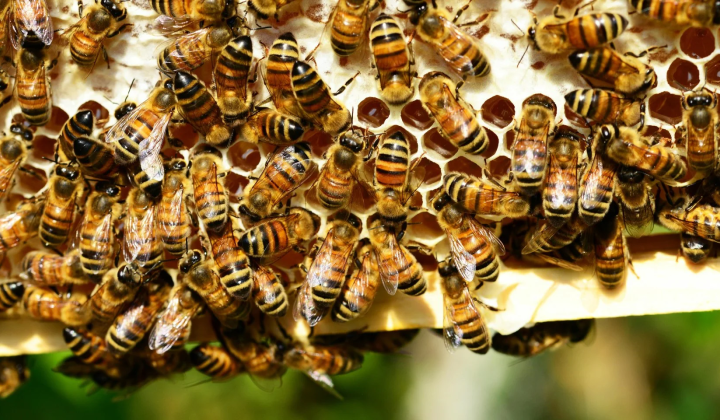
In April 2024, a group of 40 researchers signed the New York Declaration on Animal Consciousness, which has since gained support from over 500 scientists and philosophers. The declaration asserts that consciousness is possible not only in all vertebrates but also in many invertebrates, including:
- octopuses
- squid
- crabs
- lobsters
- insects
This underscores the need for a new approach to studying animal consciousness, as traditional methods can be misleading.
According to the authors of a new study published in the journal Trends in Cognitive Sciences, evaluating the structure of information processing may serve as a more reliable indicator of consciousness than simply observing behavior. Additional research on insect consciousness, published in Philosophical Transactions B, focuses on the basic computational processes of simple brain systems. These emerging scientific perspectives could deepen our understanding of the mechanisms behind consciousness-not only in animals but also in the context of artificial intelligence development.
This wave of research and new methodologies highlights the importance of a paradigm shift in consciousness studies, with major implications for how we perceive both animal minds and the potential of AI. If consciousness is indeed more widespread among animals than previously assumed, it opens up fresh avenues for exploration in biology, neuroscience, and ethics. At the same time, a clearer grasp of consciousness in relation to artificial intelligence raises new ethical questions about the deployment of such technologies in society.
As researchers explore the complexities of consciousness, it's intriguing to consider how advancements in neuroscience are also pushing the boundaries of our understanding. For instance, recent developments involving human neurons learning to play video games illustrate the potential of brain-computer interfaces and their implications for artificial intelligence. This intersection of biology and technology may further illuminate the nature of consciousness itself.

Read also