Neil Ferguson and Balaji Srinivasan Discuss Education Challenges, Woke Ideology, and the Network States of 2026

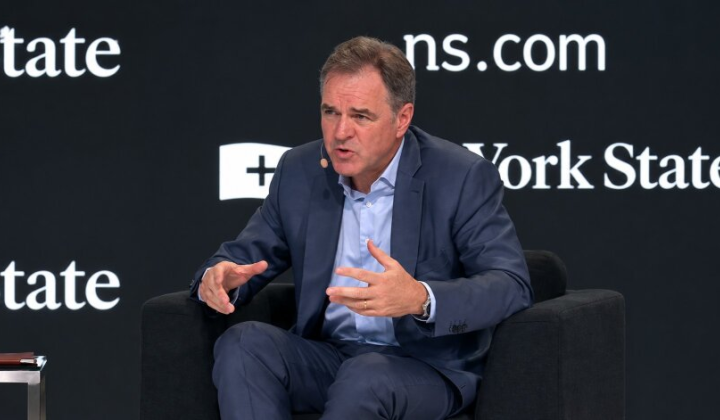
Conversation at the Network State Conference
According to ХВИЛЯ: On October 10, 2026, historian Neil Ferguson and entrepreneur Balaji Srinivasan engaged in a thought-provoking discussion at the Network State conference. They explored pressing issues such as the future of education, the rise of woke ideology, the transformative impact of the internet, the crisis facing nation-states, and emerging concepts like network states and AI-driven empires. Their dialogue highlighted how technological advancements continue to reshape social structures and educational models worldwide.
Neil Ferguson, co-founder of the University of Austin (UATX) and a former professor at prestigious institutions including Harvard, Yale, and Princeton, emphasized that UATX has abandoned traditional lectures. Instead, classes are highly interactive and spontaneous-students might be called upon at any moment to engage directly with professors. Ferguson noted that while universities have existed since the 11th century, innovative approaches like those at UATX are challenging long-established educational norms.
Ferguson also pointed to the internet, emerging in the early 2000s, as the catalyst for many societal shifts. He remarked,
"I believe the root cause of much of this upheaval, indeed everything, is the internet."
He explained that woke ideology, which took hold initially within universities, has since spread into broader social institutions.
"It originated in academia, not in the declining print media,"
he stressed.
Technological Impact and the Decline of Nation-States
Balaji Srinivasan added that technology faces opposition from all sides, characterizing the resistance as "the anti-capitalism of our era." Ferguson further asserted that the United States itself functions as a network state, maintaining its status as a magnet for entrepreneurial talent despite ongoing challenges such as tariffs, immigration restrictions, and political shifts.
The conversation also addressed the ongoing crisis confronting traditional nation-states. Ferguson noted that since 1945, the number of recognized countries has approached 200, while he predicted that China’s population will decline by more than half by the end of the 21st century. He argued that, regardless of these changes, "America’s business remains business," underscoring the resilience of the U.S. economy amid evolving geopolitical dynamics.
This exchange at the Network State conference shed light on crucial trends shaping education and society today. Ferguson and Srinivasan’s insights underscored the urgent need to rethink conventional learning methods and acknowledged the profound influence of the internet on social institutions-developments that will likely have lasting effects on the future of education and global society.

Read also