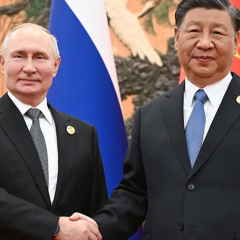
Germany shifts stance, backs tougher EU restrictions on China


Germany Rethinks Its Approach to Chinese Imports
According to Главком: Berlin has signaled a major policy shift, expressing support for stricter European Union measures on goods imported from China. This change comes as the EU’s trade deficit with China swelled from €312 billion in 2024 to €360 billion last year. European Commission President Ursula von der Leyen convened a meeting with EU commissioners to discuss strategies aimed at bolstering the bloc’s economic security.
Previously, Germany had been cautious about taking aggressive steps, wary of potential retaliation from Beijing. However, in light of the latest economic figures and persistent calls from France to protect European manufacturers, Berlin has reconsidered its position.
Joint Push by European Nations
France, together with Italy, Spain, the Netherlands, and Lithuania, submitted a joint informal document to the European Commission aimed at reinforcing trade protections. Spain later withdrew its support for the initiative. Spanish Minister of Economy and Trade Carlos Cuerpo stated that
“at this stage, Madrid has not given any political backing to the relevant informal document.”
Notably, Germany was not among the signatories of the informal document, underscoring its evolving stance within the context of European trade with China. According to the proposals put forward by the signatories, European countries plan to:
- launch investigations into trade disruptions more frequently;
- expand the staff of investigative units;
- more aggressively challenge rule violations at the World Trade Organization (WTO).
The uncertainty surrounding trade relations with China could reshape Europe’s economic landscape. As one of the EU’s key players, Germany’s repositioning may trigger fresh initiatives to regulate imports and protect the internal market. Given China’s growing competitive pressure, this development could prompt many European nations to reassess their foreign trade strategies and economic policies.
This shift in Germany's approach comes at a time when other European nations are also reassessing their trade strategies. For instance, Spain recently withdrew its support for EU trade protection measures against China, highlighting the complexities and varying perspectives within the EU regarding trade relations with Beijing. Understanding these dynamics is crucial as Europe navigates its economic future.

Read also