8.8-Million-Year-Old Capybara Tooth Discovered in Atacama Challenges 40 Million Years of Desert Dryness

Breakthrough Discovery in the Atacama Desert
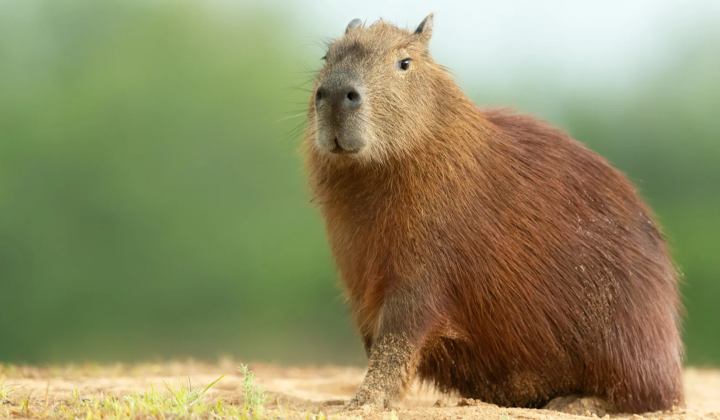
According to НВ — Техно: Researchers have uncovered an 8.8-million-year-old tooth from an ancient capybara in Chile’s Atacama Desert, revealing that this region was once far wetter than previously believed. This finding represents the oldest evidence of capybaras in Chile and calls into question the long-held assumption that the Atacama has remained an arid desert for the past 40 million years.
The tooth belongs to an extinct genus of capybaras known as Cardiatherium, found within the Bahia Inglesa Formation sandstone deposits dating back to the late Miocene epoch. Modern capybaras depend on proximity to water bodies, indicating that the environment in this area supported much more moisture than today’s extremely dry Atacama, considered among the driest places on Earth.
Additional Fossil Evidence
Alongside the capybara tooth, fossils of freshwater fish and gavials were discovered in the same sediment layers. Researchers also identified phytoliths-microscopic silica structures produced by plants-that revealed the presence of palms, ginger plants, and other flowering species around 8.8 million years ago. These botanical remains suggest the region’s ancient ecosystem was vastly different from the current desert landscape.
Previously, scientists believed the Atacama Desert’s arid conditions had persisted for roughly 40 million years. During the Miocene, the Andes Mountains acted as a significant barrier between eastern and western South America. The study's authors propose that capybaras may have dispersed through a network of humid habitats located north of the continent rather than crossing the Andes. This discovery opens new avenues for understanding the evolution of climate and biodiversity in prehistoric South America.
Beyond its paleontological importance, this find sheds light on climate shifts in South America’s geological past. It raises important questions about how flora and fauna adapted to drastically different environments and has the potential to reshape current views of the region’s environmental history. Investigating such fossils enhances our comprehension of ancient climate dynamics and the biological responses they triggered.
This groundbreaking discovery in the Atacama Desert not only sheds light on ancient capybaras but also parallels recent findings in paleontology, such as the unearthing of over 250 titanosaur eggs in Southern Patagonia. Both discoveries provide valuable insights into the diverse ecosystems that once thrived in South America, challenging long-standing assumptions about climate and biodiversity. To learn more about these remarkable fossil finds, check out the full story on titanosaur eggs.

Read also