Why Championing Employees is Now a Core HR Skill

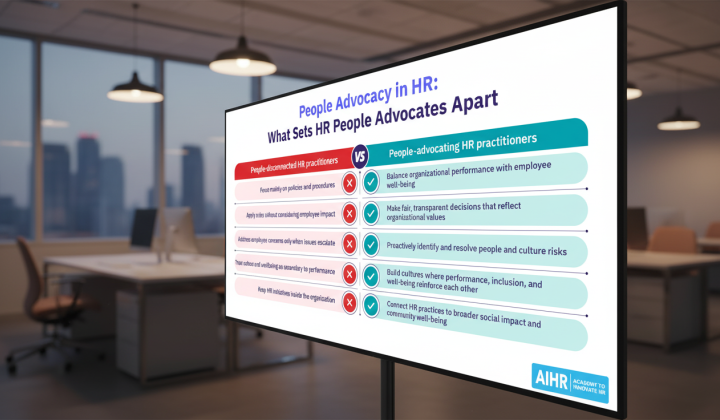
The Rise of Employee Advocacy in HR
According to AIHR: In the modern HR landscape, championing employee interests, known as 'People Advocacy,' is now recognized as one of six essential competencies in the AIHR T-Shaped HR Competency Model. This skill set is built on four core pillars: shaping culture, enabling change, upholding ethics and managing risk, and driving sustainability and social impact. Research indicates that a primary motivator for HR professionals is the opportunity to support and assist their colleagues.
A prime example of this principle in action is Walmart. The retail giant is actively collaborating with its suppliers to prevent one gigaton of greenhouse gas emissions by 2030. Given that 90% of the U.S. population lives within 10 miles of a Walmart or Sam's Club store, the company's responsibility to its communities is immense.
'With 90% of people in the U.S. living within 10 miles of a Walmart or Sam's Club, we have a responsibility. And there are several facets to that. One is sustainability. There's also community engagement, as well as disaster relief, and we participate in all of it.' - Amy Goldfinger, former Senior Vice President of Global Talent, Workforce Strategy & OD at Walmart
The Core Components of People Advocacy
The People Advocacy competency framework consists of four key dimensions:
- Culture Shaping
- Change Enablement & Resilience
- Ethical & Risk Ownership
- Sustainability & Social Impact
Walmart executes its social impact strategy through diverse initiatives, including supplier engagement for emission reductions, local community grant programs, veteran support, and disaster relief efforts.
HR professionals can cultivate this advocacy skill through eight primary methods. These include honing communication abilities, learning to give and receive feedback effectively, and understanding diverse organizational roles. Other critical areas are engaging directly with employees, studying organizational culture and inclusion practices, committing to continuous learning, finding a mentor, and developing change management expertise.
HR leaders can further develop their teams by discussing the application of artificial intelligence in HR, training teams on AI and technology ethics, upskilling in ESG (Environmental, Social, and Governance) principles, and utilizing personal skill development techniques. These efforts foster a more effective and responsible HR function that is genuinely people-centric.
This focus on advocacy is increasingly vital in today's business climate, where corporate social responsibility and community impact are under greater scrutiny. Walmart's example illustrates how a business can influence environmental and social outcomes, which not only enhances corporate reputation but also contributes to sustainable societal development. For HR, developing these advocacy competencies opens new avenues for improving workplace environments and boosting employee satisfaction, positioning the department as a strategic partner in business success.
As organizations increasingly prioritize employee advocacy, understanding how to effectively assess competencies within the workforce becomes crucial. A systematic approach not only enhances employee engagement but also aligns with the broader goals of sustainability and social impact. For HR professionals looking to refine their skills in this area, exploring a comprehensive guide on competency assessment can provide valuable insights and strategies.

Read also