A Roman Ship's Waterproof Coating: What Pollen in Resin Revealed

Secrets of Ancient Roman Seafarers
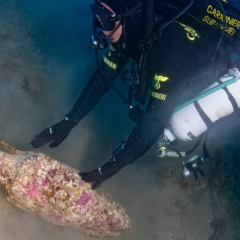
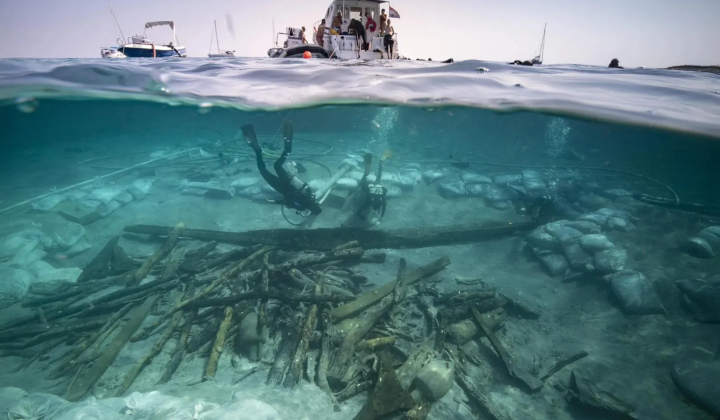
According to НВ — Техно: Ancient shipbuilding techniques are often difficult to reconstruct from archaeological evidence alone, but this find offers unusually direct clues. An international team from France and Croatia has investigated the waterproof coating of the Roman vessel Ilovik-Paržine 1, which sank about 2200 years ago near the present-day Croatian coast. The researchers used mass spectrometry to examine samples taken from the hull's protective sealant.
Two Distinct Waterproofing Methods
The analysis uncovered two categories of coating:
- The first was made mostly of heated conifer resin, particularly from pine trees.
- The second was a mixture of pine resin and beeswax, a material known in antiquity as "zopissa."
Inside the resin, the team identified pollen from oak, pine, olive, alder, ash, fir, and beech. That pollen pattern indicates ingredients sourced from the Mediterranean coastline and the upland zones of Istria and Dalmatia.
Between four and five separate layers were detected on the hull. The stern and middle sections carried the same treatment, while the bow featured three distinct blends. The ship was likely built near ancient Brundisium, today's Brindisi in Italy, and later maintained along the northeastern Adriatic coast.
Results were published in the peer-reviewed journal Frontiers in Materials. The study's authors include Dr. Armel Charre from the University of Strasbourg, together with researchers from the Camille Jullian Centre (Aix-Marseille University) and the Croatian Institute for Monument Protection. These sealing technologies, previously unknown, could reshape scholarly understanding of Roman boatbuilding and navigation.
This discovery not only demonstrates the ingenuity of ancient Roman shipwrights but also opens new ways to explore their material culture. A closer look at waterproofing methods may reveal how Roman seafarers adapted their ships to different environments, helping drive trade and the expansion of maritime routes across the Mediterranean. These findings could also guide future digs and inspire further analysis of other ancient wrecks still preserved today.
The recent discovery of ancient Roman shipbuilding techniques sheds light on the ingenuity of seafarers from the past. Similarly, the recovery of artifacts from two Swedish vessels that sank near Rügen over three centuries ago offers valuable insights into maritime history. To learn more about these fascinating finds, explore how they contribute to our understanding of historical navigation and ship construction in the recovery of Swedish ship artifacts.

Read also