Millions of Artillery Shells Flow from North Korea to Russia via the Dunay Port Route

North Korea's Role as a Key Artillery Supplier
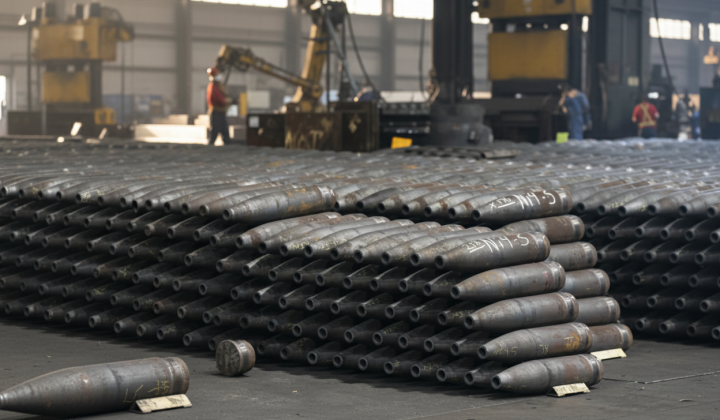
According to Главком: Since the onset of its full-scale invasion of Ukraine, Russia has turned to North Korea as a primary source for artillery ammunition. Estimates indicate that millions of shells, including 122 mm and 152 mm calibers, have been shipped from North Korea since August 2023. These munitions are transported by sea and rail, with the port of Dunay in Russia's Primorsky Krai serving as a critical logistical hub. This supply line helps sustain Russia's high-intensity artillery warfare, a defining feature of the conflict.
The ammunition is loaded onto container ships in North Korean ports and shipped to the Russian port of Dunay. Upon arrival, the containers are transferred to railcars for distribution across Russia. From autumn 2023 onward, at least several dozen voyages carrying thousands of containers have been recorded, signaling a highly active supply chain. The total volume of shipments is believed to reach into the millions of artillery shells.
Military Cooperation and Its Broader Implications
Over the past two and a half years, four Russian vessels have made a minimum of 112 voyages to North Korea. These ships could have delivered between 8 and 11 million rounds of ammunition. Since 2023, Russian ships have also executed over 100 voyages to the port of Busan in South Korea. The deepening military cooperation between Russia and North Korea occurs against a backdrop of international isolation for both nations, suggesting a strategic realignment.
Volodymyr Zelenskyy has noted that North Korean military personnel involved in Russia's war against Ukraine are gaining valuable experience in modern combat, which they could later utilize upon returning to their home country.
The expansion of this military partnership not only bolsters Russia's war effort but also provides North Korea with an opportunity to gain firsthand modern battlefield experience. This dynamic could have significant long-term consequences for regional stability in Northeast Asia, potentially altering the security calculus for U.S. allies like South Korea and Japan.
The evolving military dynamics in the region are underscored by the recent U.S. and South Korea's large-scale military drills, which involve 18,000 troops and highlight the strategic responses to North Korean threats. As both nations bolster their defense capabilities, the implications of North Korea's role as a key supplier of artillery to Russia become even more significant, reflecting a shifting balance in military alliances and preparedness in the face of ongoing conflicts.

Read also